
- By Phoenix Roofing
- ParmaRoofingCompany
- 0 Comment
If your Parma home has an L-shaped roofline, a dormer, or a garage that ties into the main house, you have at least one roof valley-and it’s one of the most likely places for a leak to start. Understanding how roof valleys in Parma, Ohio work, why they fail, and how they should be installed can save you from costly surprises down the road.
Key Takeaways
Roof valleys are among the top sources of roof leaks in Parma, Ohio. Because they funnel runoff from multiple roof planes, they handle far more water than any other section of an asphalt shingle roof-especially under the heavy snow, ice, and rain that define our local climate.
Looking for expert roofers in Parma Heights?
Phoenix Roofing & Solar is your #1 Parma roofer.
Make an appointment now!
A roof valley is the V-shaped channel where two sloping roof sections meet. It acts as a primary drainage channel for rainwater and melting snow, carrying two to five times the water volume of a typical roof section.
Valley leaks in Parma are usually caused by installation errors, aging materials, heavy snow and ice, or debris buildup-not simply “old shingles.”
Most leaking roof valleys can be repaired locally with targeted work. However, badly built, repeatedly leaking, or very old valleys may need a complete rebuild or full roof replacement.
Proper installation reduces leaks, ice damming, and interior water damage, making the contractor you choose and the methods they use critical to long-term performance.
If you suspect a valley leak, schedule a professional roof inspection and request a free estimate. Free roof inspections are offered by multiple companies in Parma serving Parma Heights, Seven Hills, Brooklyn, North Royalton, and surrounding communities.
What Is a Roof Valley?
A roof valley is the internal trough where two roof planes meet. On most Parma homes, you’ll find them where a garage roof intersects the main house, around dormers, and wherever an L-shaped or T-shaped layout creates converging slopes. Imagine a V-shaped channel running from the ridge down toward the gutters-that’s the valley.
In Northeast Ohio roofing, valleys are “collection zones.” Roof valleys act as primary drainage channels for rainwater and melting snow, gathering runoff from two or more slopes and directing it toward the gutters. This means they handle significantly more water than the surrounding roof field-a difference worth knowing when you’re trying to understand why this area fails first.
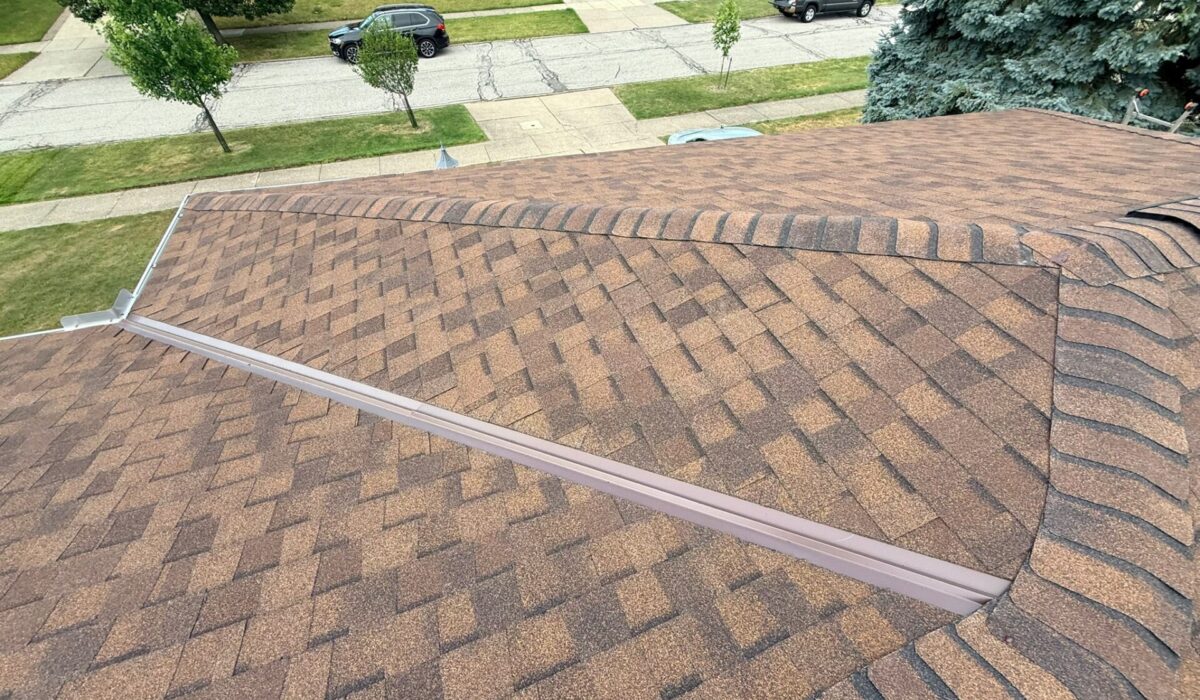
From the ground, a valley on an asphalt shingle roof looks like either a visible metal strip running down the joint (an open valley) or a shingled line where two roof planes come together (a closed or woven valley). A thorough roof inspection in Parma always includes checking valleys from both the roof surface and the attic side, because damage often sits where you can’t see it from the driveway.
Why Roof Valleys Are Vulnerable to Leaks
Valleys on a Parma home are high-stress areas. Concentrated water flow, snow, ice, and debris all converge here, so any weakness in installation or material shows up as a leak faster than anywhere else on the roof. Parma experiences an average of over 43 inches of rain and around 56 inches of snowfall annually-and valleys bear the brunt of both.
Heavy rainfall and snowfall tests the capacity of roof valleys during every major storm. Snow and ice loads from Parma winters create freeze-thaw cycles that work moisture into tiny gaps. Debris from nearby maples, oaks, and pines clogs the valley and traps water against shingles and flashing. Valleys should channel water freely without obstruction or lifting seams, but all of these factors work against that goal.
Aging shingles in the valley lose granules faster than the rest of the roof field because of the concentrated water flow. That makes the valley the first place many Parma homeowners see a leak, even when the rest of the roof still looks acceptable.
Fastener and installation problems are equally common: nails driven too close to the valley center, underlayment not lapped correctly, or metal valley flashing that isn’t wide enough for the steep roof pitch found on many 1950s–1970s Parma capes and bungalows. Storm damage-hail, wind-driven rain, or branches from strong Lake Erie storms-often shows up first in valleys. And poor previous roof repairs in this area, typically caulk-based patches, are a frequent cause of recurring leaks.
The Different Types of Roof Valleys
Most asphalt shingle roof valleys in Parma fall into three main types: open, closed-cut, and woven. Each has a different construction method, appearance, and performance profile, and all three can work well when installed correctly and matched to the roof design.
An open roof valley uses exposed metal for drainage-typically galvanized steel, aluminum, or copper-with shingles trimmed back on each side. Closed-cut valleys have shingles running through the valley, with one plane’s shingles extending across and the other plane’s shingles cut along a clean line. Woven valleys interlace shingles from both planes without cutting, creating a seamless shingled look across the joint.
Valley Type | How It’s Built | What It Looks Like | Water Drainage | Typical Use in Parma |
|---|---|---|---|---|
Open (metal) | Metal flashing over underlayment; shingles cut back several inches each side | Visible metal strip down the valley | Excellent-fast drainage, handles heavy flow | Newer installations, architectural shingles, steep slopes |
Closed-cut | Shingles from one slope run across; opposing shingles cut along clean line | Continuous shingled appearance, no visible metal | Good when installed precisely; more dependent on cut quality | Replacements wanting a cleaner look; medium slopes |
Woven | Shingle courses from each slope interlaced across valley center | Seamless woven shingle pattern | Least tolerant of heavy flow and ice; high skill required | Older Parma and Parma Heights homes, mostly with 3-tab shingles |
Some older Parma homes still have woven valleys from earlier 3-tab shingle installations, while many newer replacements use open metal or closed-cut valleys with architectural shingles. California valleys, which skip cutting shingles for faster installation, are another variation occasionally seen but less common locally.
There is no single “best” valley type for every Parma home. The right choice depends on roof pitch, shingle type, roof layout, and the roofer’s installation skill.
Open vs. Closed Roof Valleys
The terms “open” and “closed” refer to whether you can see the metal in the valley after installation.
In an open roof valley, a wide strip of metal-typically galvanized steel, aluminum, or copper-is installed over the valley underlayment. Shingles are cut back several inches on each side so water runs directly on the metal surface. Open valleys shed Parma’s heavy rain, wet snow, and ice quickly and are easier to inspect for rust, dents, or debris. Some homeowners don’t love the visible metal “stripe,” but different metal colors and finishes can soften the look and blend with shingle tones.
In a closed roof valley (closed-cut), shingles from one roof plane run across the valley and shingles from the other are cut along a clean line, so the valley surface looks completely shingled without visible metal. Closed valleys can look cleaner from the street, but they rely more on precise cuts, correct shingle layering, and proper fastener placement to handle high water flow and the freeze-thaw cycles common across greater Cleveland.
Do Roof Valleys Need Metal Flashing?
Parma homeowners often ask whether every roof valley must have visible metal. The answer: all modern asphalt shingle valleys should have a valley lining or flashing system, but it may be either exposed (open metal valley) or covered with shingles (closed or woven valley).
Roof valley flashing can mean a formed metal valley piece, metal strips combined with an ice and water shield roof valley underlayment, or a heavy-duty self-adhered membrane meeting ASTM D1970 standards under certain manufacturer specs. In Northeast Ohio, most roofers use both: an ice and water shield membrane directly on the decking and either a metal or shingle-based system above it.
Building code and manufacturer instructions must be followed. Homeowners should expect their roofer to install flashing and underlayment systems that meet current requirements for their specific shingle brand. Before signing any roof repair or new roof estimate, ask your roofing company in Parma what valley flashing system they plan to use-and get it in writing.
What’s Underneath a Roof Valley?
What you see on top-metal or shingles-is only part of a valley. Its long-term performance in Parma’s climate depends heavily on what sits underneath.
Beneath the visible material is roof decking, usually plywood or OSB wood sheathing on Parma homes. Rot or delamination here is common when a valley has been leaking for some time, and valleys must be maintained to protect the underlying decking from water intrusion.
Over the decking, self-adhered ice and water shield membranes typically run at least 18–36 inches each way from the valley centerline, providing critical protection against snowmelt and wind-driven rain. Secondary underlayment-synthetic or felt-ties into the valley membrane and covers the rest of the roof field. Laps and overlaps must be oriented to direct water into the valley, not underneath it.
Then comes the visible material: metal valley flashing, shingles, or both. A proper roof inspection in Parma should check each of these layers wherever possible, especially from the attic side, where water stains on framing or decking often tell the real story.
8 Common Causes of Roof Valley Leaks
Most leaking roof valleys in Parma and neighboring suburbs like Parma Heights, Seven Hills, and Brooklyn trace back to a handful of causes, usually tied to installation issues or weather stress.
Installation problems-improper overlaps, incorrect valley type for the roof pitch, or underlayment laid backward. 2. Improper fasteners-nails driven too close to the valley center or through exposed metal. 3. Damaged or cracked shingles concentrated in the valley where water wear is heaviest. 4. Deteriorated valley components-rusted metal, brittle membrane, failed sealant strips. 5. Debris accumulation-leaves, seeds, and branches forming dams that hold moisture against the roof. 6. Snow and ice loads, especially ice dams along eaves feeding meltwater back into the valley. 7. Storm damage from hail, wind, or falling limbs that dent metal or tear shingles. 8. Poor previous repairs that relied on caulk instead of proper rebuilding. Dead valleys-areas where water has no exit path-can lead to standing water and leaks as well.
Consider a realistic Parma scenario: a 25-year-old asphalt shingle roof with a closed-cut valley that has had multiple “patch jobs” over the years. The homeowners notice a leak during every heavy summer thunderstorm. An inspection reveals the underlayment was never replaced during earlier repairs, the metal flashing is too narrow, and the decking beneath shows early signs of rot.
Accurate diagnosis requires a roofer in Parma to inspect both the roof surface and the attic, because water in valleys often travels along decking before appearing as a ceiling stain elsewhere. Request a documented roof inspection with photos of the valley area before deciding between roof valley repair and more extensive work.
Why Fastener Placement Matters in a Roof Valley
Valleys are high-flow water channels, so nail and fastener placement is more critical here than anywhere else on a shingle roof. A single misplaced nail can become a leak path that funnels water straight to your decking.
Nails driven too close to the middle of the valley-or through exposed metal in an open valley-create tiny pathways for water, especially during wind-driven rain and freeze-thaw cycles. Correct practice means fasteners are kept a defined distance away from the valley centerline, driven flush (not overdriven or underdriven), and shingles are not face-nailed in the water channel.
Improper fastener placement is one of the main reasons a roof valley leak shows up within just a few years of roof installation, even on a relatively new roof. The fix often requires rebuilding the valley rather than simple patching, making a permanent repair more involved than most homeowners expect.
Ask your roofing company how they handle valley fastener placement and whether their team is trained to follow manufacturer valley diagrams, especially on architectural asphalt shingle roof systems.
Can Leaves and Debris Damage a Roof Valley?
In tree-lined Parma neighborhoods-off Ridge Rd, State Rd, Pleasant Valley Rd, and in parts of Parma Heights and Seven Hills-roof valleys tend to collect leaves, maple seeds, pine needles, and small branches. When debris packs into a valley, it dams up water, slowing drainage during heavy rain.
Debris accumulation can trap moisture, leading to potential water damage as shingles and metal stay wet much longer than they should, speeding deterioration. Trapped debris can also hold snow and ice in place longer, increasing the risk of ice-related damage and small leaks that only show during thaw cycles. Organic buildup encourages moss and algae growth along the valley, which can lift shingle edges and open paths for water.
Safe, periodic cleaning of roof valleys by a professional roofer-especially in fall-and including valley photographs as part of a regular roof inspection helps catch problems before they become expensive.
How Parma’s Snow and Ice Can Affect Roof Valleys
Parma and greater Northeast Ohio typically see multiple snow events each winter, fluctuating temperatures, and frequent freeze-thaw cycles that put extra stress on roof valleys. Roof valleys require extra diligence due to heavy snowfalls and freeze-thaw cycles common in this city.
Snow accumulates on upper roof slopes, melts during daytime warmth, and sends meltwater into valleys where it can refreeze overnight. This gradually works water under shingles or along nails if the valley is not sealed and flashed properly. Ice dams can occur in valleys during freezing temperatures and heavy snowfall, especially when gutters and lower roof edges freeze and meltwater backs up into the valley.
Heavy snow loads can flex the roof slightly and shift ice in the valley, cracking brittle or already-aged shingles and stressing metal seams. Proper attic ventilation and insulation mitigate ice dam formation-Parma homeowners concerned about winter performance should ask their roofing company about ice and water shield usage in valleys, ventilation improvements, and insulation upgrades.
Signs Your Roof Valley May Be Leaking
Roof valley leaks in Parma do not always show up directly under the valley. Water often travels before you see any damage inside the house.
Watch for new or expanding ceiling stains near interior walls, damp or moldy attic insulation along the valley line, water-stained or darkened roof decking visible from the attic, leaks that appear during very heavy rain but not light showers, leaks that show after snowmelt, and visible cracking, rust, or gaps along the valley from the exterior. Some homeowners first notice bubbling paint or drywall seams near bathways or stairwells that sit under a valley path, even if the roof surface looks fine from the driveway.
Document the timing-after which type of weather-and the location of any stain before calling a roofer. That information helps trace the problem back to the correct valley or flashing area. Emergency roof repairs can include tarping to stop leaks if the situation is urgent. Any sudden or recurring leak should be evaluated quickly so a small roof valley repair does not turn into a larger roof replacement project due to ongoing decking damage.
Why Water Stains Don’t Always Show Where the Roof Is Leaking
On most Parma homes, water entering through a roof valley can travel along rafters, trusses, or the underside of plywood before finally dripping through insulation and drywall several feet-or even a whole room-away from the real source. Gravity and surface tension cause water to follow lumber and fasteners, making ceiling stains an unreliable indicator of the exact leak entry point.
An experienced roofing company in Parma will inspect both the attic and the roof to trace stains back to the highest point, which often ends up being a valley joint, roof-to-wall flashing, or a penetration. Roof leak repairs trace leaks to their actual source, which is why “patching over” the visible stain location from the roof side often fails. Request attic photos and roof photographs with your free inspection so you can see how the roofer determined that the roof valley was the real source of the leak.
Can a Roof Valley Leak Be Repaired?
In many cases, a leaking roof valley on an asphalt shingle roof in Parma can be repaired without replacing the entire roof, as long as the surrounding shingles and decking are still in serviceable condition. A small repair can prevent a more costly replacement later.
A localized roof valley repair in Parma typically involves removing shingles along the leaking section, checking and replacing any damaged decking, installing new ice and water shield membrane, reinstalling or replacing valley metal as needed, and tying in new shingles to match as closely as possible. The job may focus on only 3–6 feet of valley where an installation flaw or local damage exists, but a contractor will check the entire valley run for repeating errors.
If the roof is very old or the shingles are brittle-common on a second or third roof layered over original materials-even a localized repair can be difficult because shingles above the work area may crack when lifted. Roof repairs can be done in winter, with limitations, but conditions may affect scheduling. Repairs should follow manufacturer guidelines so any remaining shingle warranty isn’t unintentionally voided by nonstandard valley details.
When Should a Roof Valley Be Rebuilt?
A rebuild is more extensive than a spot repair and is recommended when the valley’s underlying construction is fundamentally compromised.
Typical triggers include repeated leaks from the same valley despite multiple small fixes, evidence of rotten or sagging decking along the valley, obvious installation errors along the whole run-such as an incorrect valley style for the roof pitch-or widespread deterioration of valley flashing and adjacent shingles.
During a rebuild, the roofing company will tear the valley down to bare decking, replace any damaged wood, install fresh ice and water shield, and rebuild the valley system (open, closed-cut, or woven) according to current best practices for Northeast Ohio roofing. A valley rebuild is often performed as part of a larger roof repair project or in conjunction with partial or full roof replacement when the roof is near the end of its typical life.
Get a clear, written scope describing how far up each slope the tear-off will extend and what new materials will be used so you can compare quotes accurately.
Roof Valley Repair vs. Full Roof Replacement
A leaking roof valley does not automatically mean a Parma homeowner needs a whole new roof. But sometimes the valley leak is a symptom of a roof that’s worn out overall. Roof repair costs depend on the specific issue, while roof replacements typically cost around $9,000 for an average Parma home.
Factor | Roof Valley Repair | Full Roof Replacement |
|---|---|---|
Scope of work | Localized to specific valley section and adjacent shingles | Entire roof from decking up-all valleys, flashing, and shingles |
Cost | Lower; focused on the problem area | Higher upfront but resets the entire roof’s service life |
Typical timing | Completed in a short timeframe with less disruption | Longer project; more coordination required |
When recommended | Isolated leak, fair-to-good shingle condition, roof age within service window (e.g., 12–18 year-old architectural shingles) | Multiple leaks, brittle or missing shingles, extensive decking damage, roof nearing end of life |
Long-term benefit | Extends roof service at lower cost when damage is limited | Complete fresh start; new warranty coverage |
Insurance often covers storm-related roof damage, so homeowners dealing with storm damage should contact their insurer and roofing company together. An honest roofer Parma homeowners can trust will lay out both options where feasible and explain why they recommend one over the other, rather than defaulting to replacement.
What Happens to Valleys During Roof Replacement?
During a full roof replacement in Parma, valleys are not simply “left alone”-they are torn off and rebuilt as a key part of the new roof system.
The process runs step by step: removing all old shingles and valley materials down to the decking, inspecting the valley decking for rot or soft spots, replacing any compromised wood, installing new ice and water shield roof valley membranes, adding new valley flashing (for open systems) or preparing the valley for closed-cut or woven layouts, and then installing new shingles per manufacturer instructions. This is also the time to address design issues-such as replacing a woven valley with an open metal valley on a steep-slope roof-if the homeowner and roofing company agree it improves water management.
Reputable roofing companies in Parma include valley rebuilds as part of their standard roof replacement service, along with other critical flashing and edge details, and will describe the chosen valley type in their written proposal. After a proper replacement, a well-built valley should last as long as the rest of the new roof, assuming normal maintenance and weather conditions for Cuyahoga County.
Common Roof Valley Installation Mistakes
Many recurring roof valley leaks in Parma trace back to small but important installation mistakes made on day one-not just bad luck or unusual storms.
Fastener errors are common: nails driven in the valley trough, overdriven nails tearing shingle mats, or nails placed too close to cut lines in closed valleys all create paths for water under heavy flow. Poor shingle layout-where shingles aren’t extended far enough across the valley, courses are misaligned leaving gaps, or closed-cut lines leave exposed corners vulnerable to wind and water entry-compounds the problem.
Insufficient underlying protection is a serious issue in snow-prone Northeast Ohio. Skipping ice and water shield in valleys, or not running it wide enough on both sides, invites leaks within just a few years. Other mistakes include relying on heavy beads of sealant instead of proper flashing, failing to fix rotten decking before installing new material, and allowing debris or construction scraps to remain in the valley under new shingles. Ohio does not require a state roofing license for contractors, which means homeowners should vet their roofer’s experience and references carefully before any valley work begins.
How to Reduce the Risk of Future Valley Problems
No roof can be made indestructible, but a few simple habits can significantly reduce the risk of valley leaks for Parma homeowners.
Professional inspection of valleys is advisable every 1–2 years or after severe weather. Inspect valleys after severe weather for damage to shingles and flashing. Schedule a periodic roof inspection-at least every couple of years or after major storms-to cover valleys, flashing, and attic spaces for early signs of trouble. Regular inspections can help catch leaks early before they lead to significant damage.
Routine inspections and debris removal are critical for roof valley maintenance. Have a professional clear leaves and branches from valleys, especially in fall, and ensure gutters and downspouts are clear so water can exit the roof quickly.
Monitor attic ventilation and insulation levels to reduce ice dam formation. This lowers stress on valleys and eaves during winter. Keep records and photos of previous valley repairs and roof work so any future contractor understands the history and can spot recurring patterns.
Frequently Asked Questions
Parma homeowners often have specific, practical questions about roof valleys, leaks, and repairs. Below are answers to some of the most common questions we hear from homeowners across Parma, Parma Heights, North Royalton, Brooklyn, Brook Park, Middleburg Heights, Independence, and the wider Northeast Ohio area.
How long should a properly installed roof valley last in Parma, Ohio?
A correctly installed asphalt shingle roof valley, using quality materials and ice and water shield, is generally expected to last about as long as the rest of the roof system-typically 20–30 years for architectural shingles. Factors like heavy tree cover, poor ventilation, and unusual storm exposure can shorten that life, which is why periodic inspections are recommended even on relatively “young” roofs.
Can I see for myself if my roof valley is failing?
From the ground, homeowners can sometimes spot rusted metal, missing shingles along a valley, or heavy debris piles. But many valley problems are not visible without safely getting on the roof or inspecting the attic. Binoculars from the yard can help for a quick look, but climbing steep or icy roofs is unsafe-a professional roofer in Parma should handle close-up inspections.
Is it okay to pressure wash a dirty roof valley?
High-pressure washing is generally not recommended on asphalt shingle roof valleys because it can strip protective granules, force water under shingles, and even bend metal flashing. Gentler cleaning methods-low-pressure rinsing or manual debris removal by a roofing professional-protect the roof while keeping the valley clear.
Will a small valley leak always show up quickly inside my house?
Small valley leaks can wet decking or attic insulation for months before any ceiling stain appears, especially in unfinished attic spaces common in Parma and Parma Heights homes. Even minor drips or unexplained attic odors should be investigated promptly, as early roof leak repair typically costs less than repairing long-term structural and drywall damage.
Can I upgrade my valley type when I get a new roof?
In many cases, yes. A homeowner replacing an asphalt shingle roof in Parma can work with their roofing company to change from one valley style-such as woven-to another, like open metal or closed-cut, as long as it matches manufacturer guidelines and roof design. Discuss the pros and cons of each option with your roofer before signing a roof replacement contract. Several well-known companies serve the area: Mr. Roof has been installing roofs since 1962 and offers a lifetime warranty on premium roofs, HOF Roofing offers free inspections and one-day installations, and Parma Premium Roofing provides roof inspections and replacements. The easiest next step if you suspect a leaking roof valley is to contact a qualified roofing company in Parma, schedule a professional roof inspection, and request a free estimate so you know exactly where you stand.