
- By Phoenix Roofing
- ParmaRoofingCompany
- 0 Comment
If you’re searching for answers about roof decking in Parma, Ohio, you’re likely facing an aging roof, a persistent leak, or a contractor telling you that your plywood needs work. This guide covers what roof decking actually is, how to spot damage, and when replacement is truly necessary – all through the lens of Parma’s climate and local building requirements.
Key Takeaways
Roof decking (plywood or OSB sheathing) is the wood layer fastened over rafters or trusses that provides the structural base for roofing materials, including underlayment and shingles.
Water-stained decking does not always need replacement, but soft, sagging, or rotten roof decking must be replaced before a new roof goes on.
Many roof replacements in Parma, OH only require a few sheets of wood replaced – not a full re-deck – and this is usually confirmed after tear-off.
Parma’s winters, with ice dams and repeated freeze-thaw cycles, are a leading cause of moisture damage in wooden roof decking throughout Cuyahoga County.
If you’re a homeowner in Parma or Parma Heights dealing with leaks, sagging spots, or an old roof approaching two decades, schedule a professional roof inspection before committing to a full replacement.
What Is Roof Decking on a Parma, Ohio Roof?
Roof decking – also called roof sheathing – refers to the wood panels fastened directly to your home’s rafters or trusses. It forms the solid base that supports everything above it: underlayment, ice and water barrier, and your shingles.
Looking for expert roofers in Parma Heights?
Phoenix Roofing & Solar is your #1 Parma roofer.
Make an appointment now!
Think of it as a roof sandwich. From inside out: ceiling, attic framing, roof decking, underlayment or ice barrier, then asphalt shingles – the setup found on most residential homes across Cuyahoga County. Roof decking protects homes against weather elements like snow and rain by giving the entire roof system a continuous, load-bearing surface.
In Parma, OH and nearby suburbs like Parma Heights, Seven Hills, and Brooklyn, most homes have plywood or OSB decking. Older homes often have plank decking with gaps – individual wood boards laid across rafters rather than structural panels.
Core functions of decking include:
Supporting roof loads from snow, wind, and foot traffic
Holding roofing nails securely so shingles stay put
Keeping shingles flat and properly aligned
Tying the roof structure together for shear strength
Roof decking provides the structural base for roofing materials, so any roof replacement or significant roof repairs in Parma should include a thorough inspection of the sheathing beneath. Shingles can only perform well when the substrate underneath them is sound.
Plywood vs. OSB Roof Decking on Parma Homes
Most modern roofs in Parma, OH are decked with either plywood or OSB (oriented strand board). Plywood and OSB are the primary roof decking options for residential projects, and both are accepted by Ohio building codes when installed to proper thickness and grade.
Plywood roof sheathing is made from thin wood veneers glued in cross-laminated layers. It’s generally stiffer and more forgiving when briefly exposed to moisture, making plywood a popular alternative to OSB due to its moisture resistance. OSB consists of wood strands compressed with adhesives and is the most common choice for residential roof decking, largely because of its lower cost per panel.
Property | Plywood | OSB |
|---|---|---|
Cost per 4×8 panel | Higher ($40–$60+) | ~40–50% less than plywood |
Weight | Heavier, stiffer underfoot | Lighter, may flex on wider spans |
Moisture behavior | Dries faster, resists edge swelling | Absorbs at edges, slower dry-out, more prone to swelling |
Nail-holding strength | Retains grip well through wet-dry cycles | Degrades more with repeated moisture exposure |
Typical Parma use | Older homes, premium jobs, leak-prone areas | Newer construction, cost-efficient re-sheathing |
There are specific panel thickness requirements for roof replacements. For 24-inch on-center framing, many roofing contractors recommend at least 15/32-inch or 1/2-inch panels for better stiffness and nail holding, even though thinner panels may technically pass code. Using quality materials can prevent long-term moisture damage to decking over the life of the roof.
A reputable roofing company in Parma, Ohio does not need to re-deck an entire roof just to switch from plywood to OSB (or vice versa) unless the existing material is damaged or below current thickness standards. For commercial and industrial applications, steel decking is sometimes used, and metal decking offers superior fire resistance and durability – but residential homes in Parma almost always use wood-based panels. Single ply membranes like TPO and EPDM are ideal for commercial roofs, not the pitched residential roofs common in this service area.
What Causes Roof Decking to Deteriorate in Parma, Ohio?
Rotten roof decking and rotted plywood roof panels are almost always caused by moisture that lingers over time – not by age alone. Northeast Ohio experiences severe winters, and Parma’s winters can lead to moisture damage in wooden roof decking through several common pathways.
Sources of water damaged roof decking seen across Parma, Parma Heights, North Royalton, and other Cuyahoga County suburbs include:
Old or missing shingles that let water reach the wood
Failed flashing around chimneys or walls
Cracked pipe boots at plumbing vents
Neglected roof repairs that allow small leaks to persist for years
Ice dams are a specific concern in this part of Ohio. When snow melts during warmer parts of the day, water runs down toward colder eaves, refreezes, and forms a dam. Water then backs up under shingles and saturates decking along the gutter line. Over several winters, this cycle can rot decking panels along the eaves – particularly problematic with OSB.
Attic moisture also contributes. Poor ventilation, bathroom fans dumping humid air into the attic instead of outside, and inadequate insulation can cause condensation on the underside of plywood roof sheathing during cold months. Improper past roof installation – nails over-driven into thin or soft decking, insufficient underlayment, or installing a second or third roof layer over existing leaks – accelerates deterioration further.
8 Signs of Damaged or Rotten Roof Decking
Homeowners usually cannot see their roof decking directly. But certain warning signs inside and outside the house suggest possible soft roof decking or rotten panels worth investigating.
Soft or spongy feel when walked on – After a full tear off, panels that feel springy rather than firm under a roofer’s boots indicate rot or moisture damage. This often appears after ice dam seasons.
Visible sagging or waves in the roofline – Sagging along eaves, valleys, or large spans signals structural deformation. Soft eave board is common on older homes in Parma where decades of snowmelt have taken a toll.
Dark spots or deterioration visible in the attic – Looking up at the underside of decking from the attic, dark staining, damp patches, or visible decay at seams points to moisture intrusion.
Water stains or mold on decking underside – Recurring stains in the same location, especially above bathrooms or near roof vents, suggest ongoing damage.
Delamination or flaking layers – Plywood layers separating or OSB strands coming unbound and edges swelling are clear signs of material failure.
Damage around penetrations – Leaks around chimneys, skylights, or plumbing vents often cause localized decking rot where flashing has failed.
Recurring leaks despite past repairs – If shingle or flashing repairs haven’t stopped the leak, the underlying decking may be compromised in ways surface fixes can’t address.
Nails that spin or won’t hold – When driving new fasteners, nails that spin in place mean the wood can no longer grip – a direct threat to wind resistance and shingle stability.
A common Parma-specific scenario: a homeowner notices sagging along the eaves after repeated winters with severe ice dams, or chronic ceiling staining above a bathroom whose vent fan exhausts into the attic rather than through the roof.
If you notice several of these signs, schedule a professional roof inspection in Parma rather than trying to determine the decking condition from the ground.
Does Water-Stained Plywood Automatically Need Replacement?
No. Historical water staining on plywood roof sheathing does not always mean the sheet is structurally compromised. An old, dry stain from a past leak that has since been fixed is very different from active moisture causing soft, crumbly, or delaminated decking.
A roofer in Parma, OH will check for soundness during a roof replacement by probing the wood with an awl or screw, testing nail-holding strength, and verifying that each sheet lies flat and solid. Responsible roofing contractors should be able to show clear photos of any recommended decking replacement and explain exactly why the sheet is no longer suitable for a new roof installation.
Many roofs in Cuyahoga County only require limited roof decking replacement in Parma – a few sheets around problem areas – rather than full replacement of every panel.
Can New Shingles Be Installed Over Rotten Roof Decking?
New shingles should not be installed over known rotten roof decking. Rotten decking must be replaced before new roofing goes on because the decking is the structural base that must safely hold roofing nails and support loads. Soft decking must be replaced before installing a new roof – there is no shortcut around this.
Installing shingles over water damaged roof decking leads to loose fasteners, shingle blow-offs during wind events common in northeast Ohio, and premature failure of the new roof. A trustworthy roofer in Parma, OH will walk and inspect the deck after tear-off, mark soft or compromised areas, and replace only the sheets that cannot securely hold fasteners.
Ohio’s residential code allows one shingle overlay over an existing layer, but modern best practice for roof replacement in Parma is a complete tear off and repair of any damaged roof decking before installing a new roof. Placing shingles over rotten decking can also create problems if the homeowner later files an insurance claim, because the installation may not meet insurer or manufacturer expectations.
Why Isn’t Bad Plywood Always Visible Before Roof Tear-Off?
Shingles, underlayment, and sometimes previous roofing layers completely cover the top side of decking, hiding many issues until tear-off day. Full tear-offs allow inspection of hidden decking damage that simply cannot be seen any other way.
A roof inspection in Parma can reveal some clues from the outside – missing shingles, soft spots a roofer feels underfoot, visible sags. An attic inspection can show staining on the underside of sheathing, mold, or daylight through gaps. Hidden rot in decking can be revealed during a thorough roof inspection, but the decking condition is ultimately assessed after roof tear-off.
Even with careful exterior and attic inspections, neither the homeowner nor the roofing company in Parma, Ohio can know the exact number of sheets needing replacement until old roofing materials are removed. Reputable contractors disclose this uncertainty up front in roof replacement Parma, Ohio quotes, often listing a per-sheet price for unforeseen roof sheathing replacement discovered during tear-off.
Does Every Roof Replacement Need New Plywood in Parma?
Most roof replacements in Parma, Ohio do not require a full re-deck. Many roofs have mostly sound decking with only localized damage.
“Serviceable” decking is plywood or OSB that may show minor staining or age but still lies flat, holds nails firmly, and meets thickness and spacing standards. Decking that truly needs roof plywood replacement includes sheets that are spongy, cracked, delaminated, severely warped, or too thin for modern nailing requirements.
Responsible roofers replace only unsound sections – not automatically every panel – unless widespread damage from long-term leaks or a major event like fire or storm damage has compromised the majority of the property’s roof. Ask your contractor how they determine when decking can stay versus when it must be replaced, to avoid unnecessary cost.
Replacing Individual Sheets vs. Re-Decking the Entire Roof
Roof deck repair ranges from replacing a handful of sheets in problem areas to re-decking the entire roof when damage is extensive.
Replacing Individual Sheets | Full Re-Decking (Entire Roof) |
|---|---|
Localized damage around chimneys, valleys, eaves | Pervasive rot from long-term leaks or storm damage |
Common in typical Parma Heights roof repairs | Required when old plank decking doesn’t meet code |
Lower cost, shorter project time | Higher cost, more construction time |
Preserves most existing decking | Uniform new substrate across the entire roof |
Usually no structural permit required | May require permit and inspection |
Many roof replacement Parma, Ohio projects fall somewhere in between, with partial sheathing replacement concentrated along eaves, valleys, or around penetrations like chimneys and skylights.
How Roof Decking Is Replaced During a Roofing Project
Here’s what to expect when a roofer in Parma, OH discovers damaged decking during your project:
Permits and prep – The contractor obtains required building permits from Parma. Roof decking must comply with local building codes for safety, and local building codes dictate minimum thickness for roof sheathing.
Full tear-off to decking – All old shingles, underlayment, and flashing are removed. Roof replacement involves a complete tear-off and rebuild of the roofing layers.
Walk and inspect the deck – Crews walk the exposed surface, probing for soft spots and checking around penetrations.
Mark and remove bad sheets – Spongy, cracked, or delaminated panels are pulled and set aside.
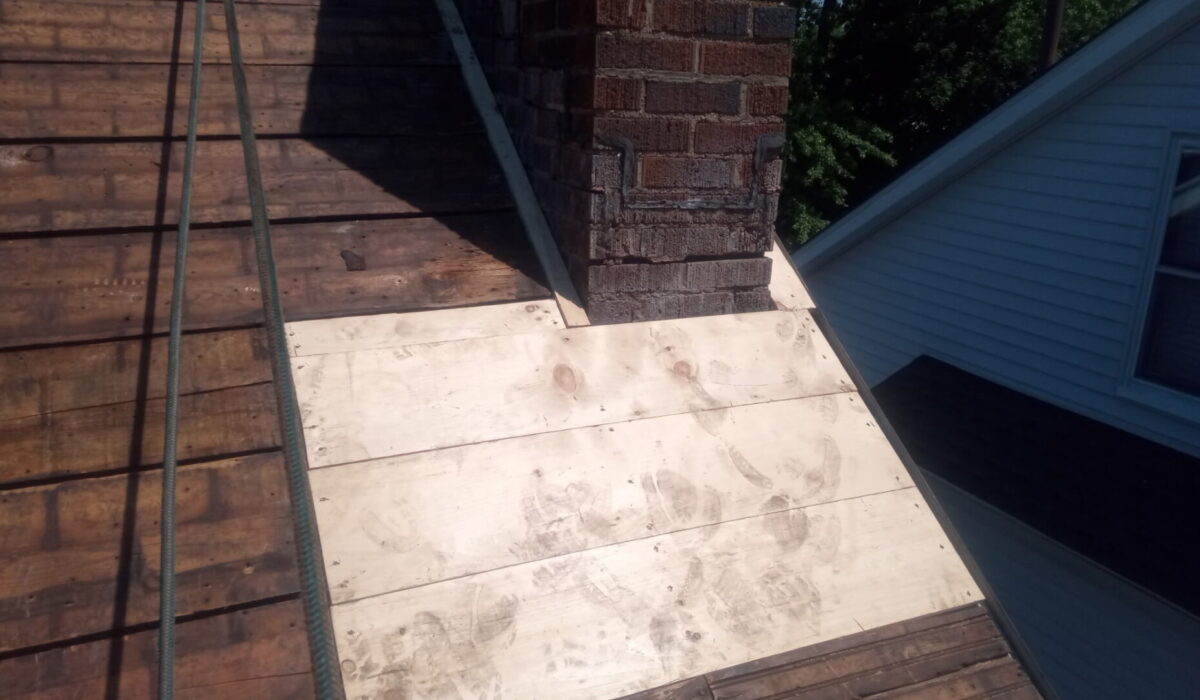
Install new decking – New plywood or OSB of appropriate thickness is fastened per code, with edge clips where required.
Re-nail adjacent sound areas – Loose old nails are pulled and replaced to restore grip.
Install underlayment and ice barrier – Contractors should ensure waterproof underlayment is used over the decking, especially at eaves and valleys per Ohio code for climate zones 5–6.
Shingles, flashing, gutters, and cleanup – The roof installation is completed, and the property is cleaned up.
Responsible roofing contractors photograph damaged and replacement areas for the homeowner’s records and any potential insurance claim documentation. In Cuyahoga County, weather and scheduling are factors – any exposed decking is dried-in the same day with underlayment. If work extends, crews typically return the second day to finish. A full roof replacement typically takes one to two days, though decking repairs can increase overall roof replacement costs and may extend the timeline slightly.
Decking condition affects roof replacement pricing significantly, and replacement in Parma is typically priced per sheet on the contract so homeowners know the rate before work begins – even though the exact quantity may only be confirmed on tear-off day.
Why Roof Decking Is Critical for Asphalt Shingle Performance
How long your new roof lasts in Parma’s climate – with heavy snow loads, 80 to 100 freeze-thaw cycles per year, and frequent wind events – depends directly on the decking beneath your shingles. Architectural asphalt shingles are a popular residential roofing choice, but even premium shingles cannot perform as designed if fastened into rotten roof decking or severely warped sheathing.
Sound decking provides a flat, stable install surface that keeps shingle courses straight, valleys tight, and flashing properly seated at chimneys and roof-to-wall transitions. Nail-holding strength is essential: solid plywood or OSB grips nails so shingles resist wind uplift, while soft or crumbling decking lets nails loosen or back out over time.
Manufacturer warranties often cover defects and weather degradation – and GAF Lifetime Shingle systems offer better energy performance – but these warranties generally assume decking is structurally sound. Ignoring bad sheathing can jeopardize the performance of an otherwise well-installed new roof.
Common Places Roof Decking Deteriorates First
Decking damage is rarely uniform. Certain areas on Parma and Parma Heights homes are more prone to rot and soft spots:
Around chimneys where flashing has failed or sealant has cracked
In valleys that concentrate runoff from multiple roof planes
Around plumbing vents and pipe boots where cracked rubber lets water track beneath the sheathing
At skylights where seals and flashing age over decades
At roof-to-wall transitions behind siding or step flashing on dormers
Eaves and edges deserve separate attention. Damage from ice dams and poorly installed or clogged gutters is extremely common in Cuyahoga County winters. Soft eave board on older homes is one of the most frequent findings during tear-off in Parma, OH.
When repeated leaks or ceiling stains appear in these zones, it’s a strong hint that local roof deck repair or limited roof sheathing replacement may be needed. A thorough roof inspection in Parma should include careful attention to these high-risk transitions – not just the open shingle fields.
Can Poor Attic Ventilation Damage Roof Decking?
Poor attic ventilation can contribute to roof decking problems, but it is rarely the only factor. Moisture sources and insulation quality also matter.
During northeast Ohio winters, warm, moist indoor air can rise into the attic and condense on the underside of cold plywood roof sheathing. Over time, this creates mold and rot if proper attic ventilation prevents moisture buildup – or accelerates damage if ventilation is inadequate.
A balanced system needs both intake ventilation (soffit vents) and exhaust ventilation (ridge vents or box vents). Blocked soffits – painted over, or stuffed with insulation – are common in older Parma, OH homes and trap moisture against the decking. Ventilation is also crucial for warranty coverage on new roofs, as many manufacturers require adequate airflow to honor their guarantees.
Any roof replacement or major roof repairs in Parma should include an evaluation of attic ventilation, insulation, and air sealing to reduce future condensation-related decking damage.
Can You Inspect Roof Decking from the Attic?
The attic is often the best place a homeowner can safely look for early signs of damaged roof decking without climbing on the roof. Contractors should inspect the attic to assess decking condition as part of any pre-project evaluation.
What you can see from the attic:
Dark water stains on plywood or OSB
Mold growth on the wood surface
Delamination or sagging between rafters
Visible daylight at seams or nail holes
Evidence of past or active leaks near vents and chimneys
What may remain hidden: damage under thick insulation, rot at the outer eaves beyond the exterior walls, or issues covered by finished ceilings or cathedral roof structures.
If you enter your attic, stay on joists, use adequate lighting, and avoid disturbing insulation too much. Consider calling a professional roofer in Parma, Ohio if conditions are tight or unsafe. An attic check is useful but not a substitute for a full professional inspection and tear-off evaluation when a new roof installation is being planned.
What Happens If Damaged Roof Decking Isn’t Replaced?
Skipping necessary roof decking replacement can quietly shorten the life of a new roof and lead to more frequent roof repairs in Parma. The practical consequences include:
Poor nail-holding causing shingle blow-offs during storms
Continued water intrusion into the attic and living spaces
Uneven roofing surfaces that collect ice and debris at low points
Difficulty properly sealing flashing at chimneys and transitions in areas where the wood is rotten
Small areas of remaining rot can expand over time, turning what could have been a simple localized roof deck repair into a larger structural or interior problem. Replacing clearly unsound decking is a smart, preventive step that helps protect the homeowner’s investment in a new roof – not an upsell.
Proper documentation of replaced decking can also help with future maintenance decisions and potential resale disclosures for Parma and Parma Heights property owners.
Questions Parma Homeowners Should Ask About Plywood Replacement
When reviewing a roof replacement Parma, Ohio quote that includes possible decking replacement, use these questions as a checklist:
Why does this sheet need replacement? The contractor should have a clear, specific answer.
Can you show me photos or video? Honest assessments are backed by documentation.
Is the problem localized or widespread? This determines whether you need a few sheets or a full re-deck.
What thickness and type of material will you use? Specific panel thickness and grade should be included in estimates.
How do you calculate additional wood costs? A transparent pricing policy for wood replacement is important – ask whether it’s per sheet, linear foot, or flat allowance.
Will I approve extra charges before you proceed? Establish a threshold beyond which the crew contacts you.
What caused the damage, and how will the new roof prevent recurrence? This shows the contractor is thinking about the complete roof system, including ventilation, flashing, and drip edge details.
Also ask whether the roofer is fully insured, has a strong BBB rating, and is familiar with Parma and Cuyahoga County permitting requirements. Clear answers to these questions are a good sign that the roofing contractor is focused on long-term solutions, not just selling a full replacement in Parma when repairs or partial decking work might be sufficient.
Frequently Asked Questions About Roof Decking in Parma, Ohio
Can I Replace Roof Decking Myself on a Parma Home?
While experienced DIYers can technically replace small sections of sheathing, roof deck work involves significant fall risks, structural judgment calls, and local code requirements that are best handled by a professional roofing company in Parma, Ohio. Improper installation can void warranties and create safety hazards. The cost savings rarely justify the risk for most homeowners.
Is Roof Decking Replacement Usually Covered by Homeowners Insurance?
Coverage depends on the cause. Sudden damage from a covered peril – like wind, a fallen tree, or a severe storm – may be eligible under an insurance claim. Long-term rot from neglect or deferred maintenance usually is not covered. Review your policy carefully and discuss any claim with both your insurance agent and your roofer before work begins. Warranties may transfer to new homeowners upon sale of the house, which is another detail worth confirming with your contractor and insurer.
Can Roof Decking Be Repaired in Winter in Northeast Ohio?
Emergency decking repairs and replacements can be done in cold weather if conditions are safe, but shingles and underlayment have temperature limits for proper adhesion and sealing. Contractors in Parma and Cuyahoga County plan around snow, ice, and wind to ensure quality installations. If you’re searching for a winter repair, make sure the company has experience working in cold-weather conditions common from Cleveland to Akron and across Summit County.
How Thick Should Roof Decking Be on a Typical Parma House?
Many modern homes use 7/16-inch OSB or 1/2-inch plywood, but actual requirements depend on rafter or truss spacing, local building codes, and manufacturer recommendations. For 24-inch on-center framing, Ohio institutional specs often call for 5/8-inch panels. Ask your roofer what thickness they are proposing and why – it should be in writing on your estimate. Some roofing companies in the area, such as Bill Jackson Roofing, offer a 20-Year Red Shield Warranty, and HOF Roofing provides a 10-Year workmanship warranty on installations – both of which may have specific decking requirements. Some metal roofing systems have warranties up to 50 years, and standing seam metal roofs can last over 70 years, though these use different decking considerations than standard asphalt shingle roofs. For homeowners exploring free estimates and free inspections, asking about decking specs upfront ensures your project meets both code and warranty standards. A certified installer will be able to walk you through the factors that determine the right panel for your house.
How Often Should My Roof Decking Be Checked in Parma, OH?
A professional roof inspection every few years – or after major storms – is a sound practice. Pay special attention to older roofs approaching 20 to 25 years, the point at which many homes in Parma are considering their second or third roof and the existing decking has endured decades of northeast Ohio weather. Catching decking issues during timely roof repairs is far less disruptive and expensive than discovering them only at full replacement time. Whether your concern is landscaping damage from a tear-off or the cost of an old roof reaching end of life, an inspection helps you plan and determine next steps. Companies across the area – from Lakewood to North Ridgeville and beyond – can inspect and cover your roofing needs, but choosing a local business familiar with Parma helps ensure honest assessments and code-compliant work.