
- By Phoenix Roofing
- ParmaRoofingCompany
- 0 Comment
Most ceiling stains and mystery drips on Parma roofs trace back to a small, inexpensive component that many homeowners have never heard of: the pipe boot. Here is what causes these leaks, how to spot them, and when a localized repair is all you need.
Key Takeaways
A pipe boot is the flashing assembly that seals a plumbing vent where it passes through the roof. Cracked rubber pipe boots are common roof failure points and one of the most frequent sources of residential roof leaks.
A leaking roof pipe boot typically causes water stains near bathrooms or laundry rooms. A musty odor in upper-floor rooms can also signal moisture intrusion from a failing boot.
In Parma, OH and Cuyahoga County, many pipe boot leaks can be fixed in a single day after a professional roof inspection and free estimate from a local roofing company; a new roof is often unnecessary.
Northeast Ohio’s freeze-thaw cycles, summer heat, and lake-effect snow are hard on pipe boots, so regular roof inspections help catch problems before plywood and ceilings are damaged.
Roof repair costs in Parma start at $300, depending on damage scope; localized pipe boot replacement typically falls between $250 and $550.
What Is a Roof Pipe Boot?
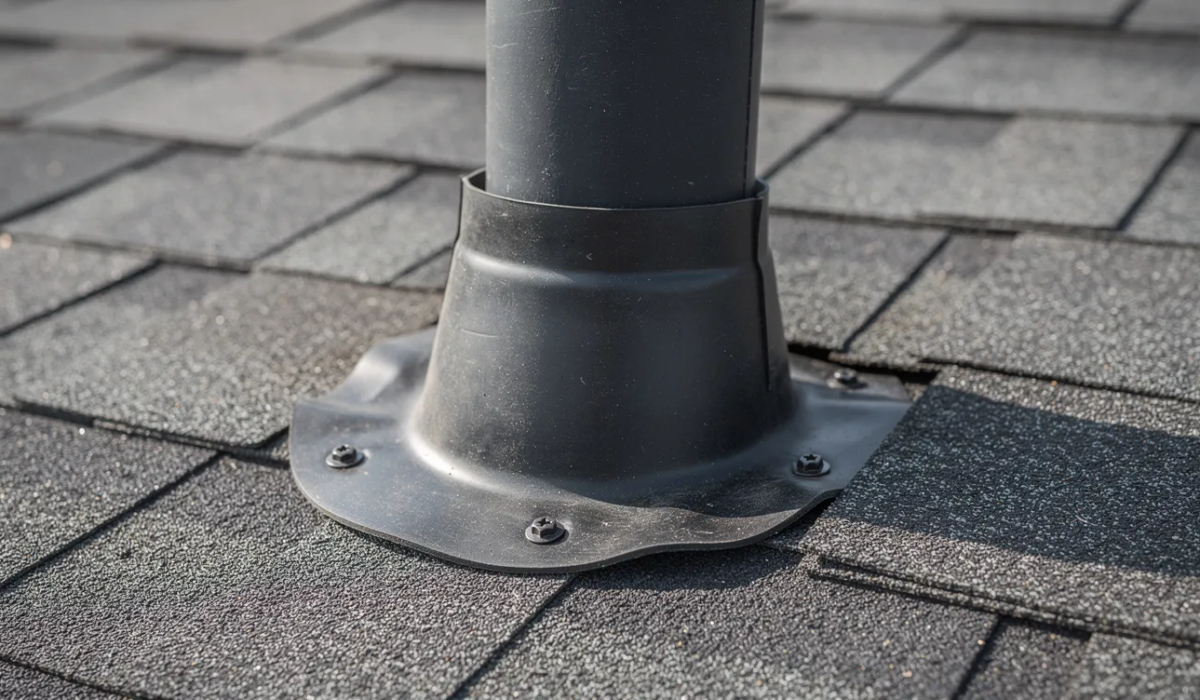
A roof pipe boot is a critical piece of flashing that seals plumbing vent pipes where they penetrate the roof surface. Pipe boots are vulnerable points for roof leaks because even a small gap between the collar and the pipe lets water into the roof system.
Looking for expert roofers in Parma Heights?
Phoenix Roofing & Solar is your #1 Parma roofer.
Make an appointment now!
Base flashing: A flat metal or plastic plate that sits on the shingles and integrates into the roofing layer. The lower edge rests on top of shingles below; the upper edge tucks under shingles above, so water sheds over the flashing, not under it.
Cone or sleeve: A raised section that encircles the pipe, bridging the gap between the flat base and the flexible collar.
Rubber collar: A flexible ring (typically neoprene or EPDM) that grips tightly around the vent pipe. When this collar cracks or pulls away from the pipe, water enters around the vent and causes a roof leak, even if the rest of the shingles look fine.
Ohio’s plumbing code requires the vent-pipe/roof junction to be watertight with approved flashing, making proper installation of pipe boots crucial to avoid leaks.
What Does a Plumbing Vent Pipe Do?
Plumbing vent pipes allow sewer gases to escape safely above the roofline and introduce air into the drain system so wastewater flows smoothly through pipes inside the walls.
Every full bathroom and most kitchens in a Parma home connect to at least one vertical vent pipe that exits through the roof.
Because vent pipes must break through the roof surface, they are natural weak points in the roofing system that rely on proper flashing and boots to stay watertight.
When homeowners see water leaking around a vent pipe, the problem is almost always the roof pipe boot or flashing, not the plumbing inside the walls.
What Does a Roof Pipe Boot Look Like?
Most plumbing vents on Parma roofs are round PVC pipes, often 2 to 4 inches in diameter, sticking roughly a foot above the shingles with the pipe boot flashing visible at the base.
Traditional rubber roof boot: Black or dark gray rubber collar on a galvanized steel or aluminum base. The metal base is partially hidden by surrounding shingles.
Plastic boots: All-PVC construction, lighter weight, typically less durable against UV.
All-metal or telescoping boots: Lead, copper, or engineered metal collar assemblies that resist UV and temperature cycling far longer than rubber. These cost more upfront but can last decades.
On older Parma bungalows and ranches built in the 1950s through 1970s, original boots may appear dry, chalky, or curled at the top edge where they meet the vent pipe. That appearance is an early warning of an upcoming leak.
10 Reasons Roof Pipe Boots Leak
Cracked rubber pipe boots are a common roof leak source, but rubber degradation is only one of several causes. Here are ten reasons a pipe boot on a Parma roof may fail.
Cracked rubber: The flexible collar dries out, splits, or develops hairline cracks right where it wraps around the vent pipe, creating tiny openings for wind-driven rain.
Age and weathering: Aging pipe boots frequently cause leaks in older homes. In Parma’s climate, basic rubber boots often start failing around 10 to 15 years, often before the surrounding shingles reach end of life.
UV exposure: Constant sun on south- and west-facing slopes in Cuyahoga County accelerates breakdown of rubber and plastic pipe boots, especially darker colors.
Temperature swings: Northeast Ohio’s repeated freeze-thaw cycles make rubber stiff in winter and soft in summer, creating fatigue that shortens boot life.
Improper installation: Nails placed too high, flashing not woven correctly into shingles, or missing sealant at critical points let water get under the base. Proper installation of pipe boots is crucial to avoid leaks.
Fastener problems: Loose nails, backed-out screws, or corroded fasteners around the pipe flashing roof area create gaps where water is driven under the boot.
Pipe movement: Slight shifting of the plumbing vent stack from settling or thermal expansion enlarges the gap between the vent pipe and the boot collar over time.
Storm damage: Wind-lifted shingles, falling branches, hail, or ice sliding down the roof can bend or crack the roof vent flashing and break the watertight seal.
Surrounding shingle deterioration: Brittle, cupped, or missing shingles directly above the pipe boot let water run behind the flashing instead of over it, causing a roof penetration leak.
Improper previous repairs: Caulk-only fixes, wrapped tape, or roofing cement smeared over a failing boot crack within a season or two and hide the real problem, making leak repair more difficult later.
7 Signs a Pipe Boot May Be Leaking
Watch for these warning signs inside and outside your house.
Ceiling stains below the vent line: Brown or yellow rings on ceilings or upper walls directly under a bathroom or hallway often trace back to a nearby plumbing vent roof leak. Common signs of a roof pipe boot leak include water stains on ceilings or walls.
Attic staining around the vent pipe: Dark water streaks or mold on the roof decking and rafters near each vent penetration. Dampness or mold in the attic can indicate a roof pipe boot leak.
Damp or soft decking: Plywood around a leaking roof vent may feel spongy or show delamination, signaling longer-term water intrusion that needs prompt proper repair.
Cracked or split collar: Look from the ground with binoculars for obvious splits where the boot meets the vertical pipe. Cracked or missing exterior components can be a sign of a leaking pipe boot.
Visible gaps or lifted flashing: Edges of the metal base lifting away, missing nails, or daylight visible underneath the boot when checked from inside the attic.
Deteriorated shingles near the pipe: Curled or missing shingles above or beside the pipe boot often accompany a leaking roof vent and may need replacement during leak repair.
Rain-related or wind-driven leaks: Leaks that only appear during heavy rain or storms from a certain direction point toward pipe boot and roof vent pipe leak failures rather than broad roof failure.
Musty odor: A musty smell in upper-floor rooms or hallways can signal moisture intrusion from a leaking roof pipe boot, even before visible stains appear.
Plumbing Vent vs. Bathroom Exhaust Vent
Homeowners often confuse these two roof penetrations. Correct identification helps a roofer in Parma, Ohio locate the actual problem quickly during a roof inspection.
Feature | Plumbing Vent | Bathroom Exhaust Vent |
|---|---|---|
Purpose | Vents sewer gas; allows air into drain system | Removes moist air from bathroom fan |
Pipe/Duct type | Solid PVC or cast iron pipe, open at top | Flexible or rigid duct connected to fan motor |
Roof cap appearance | No cap; open pipe with boot at base | Hooded cap with damper or screen |
Common leak sources | Cracked pipe boot, failed plumbing vent flashing | Cracked vent hood, damaged cap flashing, failed damper |
A roof vent pipe leak usually involves the pipe boot or plumbing vent flashing, while a leaking bathroom vent may involve the vent hood flashing, a damaged cap, or a poorly sealed duct penetration.
Why Is Water Leaking Near My Bathroom Vent?
Water dripping from or near a bathroom fan grille does not always mean a roof leak. Several sources can produce water in that area.
Condensation: Warm, moist bathroom air hitting cold metal ductwork in winter can produce water droplets that drip back through the fan grille.
Misrouted water from a higher leak: A plumbing vent roof leak higher on the roof can run along rafters and appear near a bathroom vent opening, making the true source easy to misdiagnose.
Failed exhaust cap: A cracked bathroom exhaust roof cap or its flashing can allow rain in, especially if the damper is stuck open or shingles around the cap are damaged.
A proper roof inspection in Parma should check both the bathroom exhaust vent and any nearby plumbing vent boots to pinpoint where water shows up and where it actually enters the roofing system.
How Roofers Diagnose Pipe Boot Leaks
A proper diagnosis starts with a thorough roof inspection. Inspecting the attic can help confirm the source of water intrusion from the roof. Here is the typical sequence.
Exterior inspection: A roofing company in Parma, Ohio begins by checking every pipe boot, roof vent flashing, and nearby shingles for cracks, lifted edges, or rusted fasteners. Openly inspecting the roof and attic can help identify and confirm leaks before repairs.
Attic inspection: The roofer examines the attic on a dry day (and ideally during or soon after rainfall) to look for active drips, stains, and moisture trails along the underside of the roof decking.
Tracking the entry point: Stains are traced “uphill” along rafters to find the true entry point, which may be several feet away from the interior ceiling stain due to water traveling along wood grain.
Documentation: Photos of the damaged pipe boot, surrounding shingles, and any affected plywood are taken to include with a written estimate for roof leak repair work.
Honest assessment: A reputable roofer in Parma, Ohio will confirm whether the leak is localized at the boot or if broader issues, such as widespread shingle failure, justify more extensive repairs.
Why Water May Appear Away From the Failed Pipe Boot
Most leaks are misdiagnosed because water shows up far from the actual entry point.
Once water gets under shingles near a roof penetration leak, it follows gravity but is guided by rafters, ceiling joists, and the top surface of the decking. Water travels along rafters before showing on ceilings.
Water can run 10 to 15 feet along a rafter before dripping down, so the interior stain may appear in the middle of a room, far from the actual pipe boot.
Insulation acts like a sponge, absorbing water and releasing it at a low point, further separating the visible leak from the true source.
Chasing only the ceiling stain often leads to repeat roof leak repair work. Tracking the leak back to the pipe boot or flashing is essential for a proper repair.
Can Pipe Boot Leaks Damage Plywood?
Yes, if left long enough. Here is how the progression works on Parma homes.
Occasional, short-term leaks around a pipe boot may cause surface staining on plywood or OSB roof decking without serious structural damage if repaired quickly.
Repeated wetting and drying cycles over months or seasons lead to delamination, soft spots, and eventual rot in the decking around the plumbing vent.
Parma homeowners may notice a spongy feel underfoot near the vent on the roof surface or see sagging sections from the ground.
During leak repair, a roofer in Parma, Ohio can replace localized sheets of damaged plywood around the vent, restoring a solid base for new shingles and a new boot.
Can a Pipe Boot Be Replaced Without Replacing the Roof?
Yes, often. If the surrounding shingles are still flexible, lie flat, and have not reached end of life, a roofer can remove and replace just the failing pipe boot flashing.
This kind of targeted roof leak repair is common on Parma homes where the overall roof is in decent condition but one or two boots have cracked.
Most roof repairs in Parma can be completed in a single day, and pipe boot replacement is one of the faster jobs.
The roofing company will still evaluate the entire roof during the inspection to confirm there are no broader issues such as widespread granule loss or multiple active leaks.
If many components (shingles, flashing, underlayment) are all failing across multiple areas, it may be more cost-effective to discuss roof replacement rather than repeated small repairs.
How a Pipe Boot Is Replaced
Here is the typical professional process. Roof repairs in Parma include leak diagnosis and shingle replacement as needed around the boot.
The roofer carefully lifts and removes shingles around the old pipe boot, exposing the full flashing while preserving any shingles still in good condition.
The replacement process involves removing old nails and sliding off the damaged boot. The exposed decking around the vent pipe is checked for moisture damage or rot that may require small decking repairs.
New underlayment or ice-and-water shield is installed around the penetration as needed, followed by a new pipe boot flashed and integrated correctly with the surrounding shingles. Quality pipe boot flashing can prevent future water intrusions.
Shingles are reinstalled or replaced, nail heads are sealed where appropriate, and the finished area is inspected to ensure the new boot sheds water properly down the roof slope.
Repairing vs. Replacing the Pipe Boot
Homeowners often ask if they can “just patch it.” Here is how temporary fixes compare to full boot replacement.
Minor surface cracks in newer boots might be temporarily sealed with compatible roofing sealants as a short-term measure, but this does not restore the original long-term flexibility of the rubber.
Quick leak repairs may involve a slip-over repair sleeve if the underlying boot is structurally sound; this buys time without tearing into surrounding shingles.
The proper solution for a completely split or cracked boot is to replace it entirely. Full pipe boot replacement addresses the root cause by installing new flashing and a new collar.
For Parma homeowners planning to replace the roof in the next year or two, a roofer may recommend a careful temporary repair. Roofs with several good years left usually justify full boot replacement.
The roof leak repair decision should weigh cost, remaining roof life, and the risk of recurring leaks and plywood damage if only patches are used.
Why Caulking a Pipe Boot Isn’t Always a Permanent Repair
Sealants have legitimate uses in roofing, but they are often misused on pipe boots.
Caulking over a split rubber collar may stop a roof leak for a season, but the underlying rubber continues to deteriorate, and the sealant itself can crack under UV and temperature stress.
Parma’s freeze-thaw cycles cause constant expansion and contraction around the vent pipe, which quickly breaks rigid caulk bridges applied across larger gaps.
Appropriate uses for sealant include nail heads, flashing edges designed to be sealed, and minor joints where manufacturer guidelines allow. Sealant is not a substitute for failed flashing components.
If a pipe boot has obvious cracking or the metal base is rusted or pulled loose, the proper repair is replacement of the boot, not layers of roof cement or silicone.
Can a Plumbing Vent Leak Be Confused With Condensation?
Yes, and the distinction matters for choosing the correct repair.
True roof pipe boot leaks usually line up with rainfall or snowmelt events and show stained wood or insulation near the roof deck around the penetration.
Condensation problems, common in Parma, OH winters, produce water droplets inside metal ducts or on cold vent pipes when warm interior air meets cold surfaces.
Condensation-related moisture may appear even during dry weather and is often linked to poorly insulated ducts, disconnected bath fans, or lack of attic ventilation.
A detailed attic and roof inspection helps distinguish between a flashing or boot failure and an indoor humidity or ventilation problem, so the correct repair is chosen.
How Parma’s Seasonal Weather Affects Roof Penetrations
Parma’s climate can affect the longevity of roof pipe boots due to freeze-thaw cycles and heavy snowfall. Roof pipe boots often crack or degrade due to extreme weather conditions in this region.
Hot summer sun bakes south-facing slopes, accelerating UV damage and rubber drying on pipe boots and other roof penetrations.
Cold winters with snow and ice loads in Parma, Parma Heights, and Seven Hills keep roofs wet for extended periods, increasing stress on flashing joints and sealants. Ice dams can back water up under shingles near penetrations.
Freeze-thaw cycles cause small gaps around pipe boots and roof vent flashing to open and close repeatedly, turning hairline cracks into active roof leaks.
Lake-effect snow from Lake Erie piles up on lower-slope roofs in nearby communities like Brooklyn, Independence, Middleburg Heights, North Royalton, and Brook Park. When meltwater backs up, any weakness around roof pipe flashing is more likely to leak.
Scheduling periodic roof inspections in Parma, especially before and after winter, is a practical way to catch failing boots early.
Does a Failed Pipe Boot Mean the Entire Roof Needs Replacement?
No, not by itself. A single cracked pipe boot on an otherwise healthy asphalt shingle roof in Cuyahoga County is typically a localized problem.
Many Parma homeowners are told they need a new roof when the only active leak comes from one or two failing roof pipe boots or vent flashings. That is throwing money at a problem that a small leak repair can solve.
Conditions that may justify discussing roof replacement: many brittle or curling shingles, multiple active leaks in different areas, or prior patchwork repairs all over the roof.
A reputable roofer in Parma, Ohio will provide photos and a written estimate explaining why they recommend either localized leak repair or a more comprehensive roof replacement, rather than defaulting to the most expensive option.
Pipe Boot Repair vs. Roof Replacement
Here is a side-by-side comparison of the two options.
Factor | Pipe Boot Repair | Full Roof Replacement |
|---|---|---|
Typical cost | $250 to $550 per boot (roof repair costs in Parma start at $300) | $8,000 to $15,000+ depending on size and materials |
Scope | One or a few roof penetrations | All shingles, underlayment, flashings, drip edge, pipe boots |
Timeline | Usually completed in a single day | Multiple days |
Best when | Rest of roof is serviceable; isolated boot failure | Widespread shingle failure, multiple leaks, aging system |
Impact on roof life | Extends function of current roof at the problem area | Resets the entire roofing system with new materials |
In many Parma, OH situations, especially for mid-life roofs with no other problems, proper repair of a leaking pipe boot is all that is needed to stop the roof leak and protect the home.
Other Roof Penetrations That Can Leak
Pipe boots are one of several common leak points on Parma roofs. Common leak sources include flashing, pipe boots, and valleys; here are other penetrations to watch.
Bathroom exhaust vents: Cracked vent caps, missing dampers, or poorly flashed bases can cause a leaking roof vent near bathrooms and laundry rooms. Common roof repairs include fixing flashing and replacing missing shingles around these vents.
Kitchen hood vents: Metal hoods or boxes with flashing that can rust or separate from shingles, leading to roof penetration leaks during heavy Parma storms.
Passive roof vents and ridge vents: Damaged vent housings, loose fasteners, or improper installation can let wind-driven rain enter the attic.
Skylights: Old or improperly flashed skylights, especially on low-slope sections, often leak at the corners or where step flashing meets surrounding shingles.
Chimneys: Chimney flashing, counterflashing, and cracked mortar joints are frequent leak sources checked during a comprehensive roof inspection in Parma.
When Should Parma Homeowners Schedule a Roof Inspection?
Proactive inspections cost nothing if the roofing contractors in your area offer a free inspection and free estimate, and they can save thousands in water damage. Here are specific situations when you should pick up the phone.
Ceiling or wall staining below an upper-floor bathroom, kitchen, or hallway, especially after rain, should prompt a roof inspection to check nearby pipe boots and vents.
Visible cracked or deteriorated pipe boots from the ground, or rubber collars pulling away from vent pipes, are strong reasons to schedule leak repair in Parma before winter.
Repeated leaks in the same area, even after prior patching or caulking, indicate that the underlying flashing or boot likely needs a proper repair or replacement.
After severe storms with high wind, hail, or heavy snow loads in Parma, Parma Heights, Brooklyn, or Seven Hills, homeowners should consider a quick roof inspection to catch storm damage and document damage to vents and boots for insurance purposes.
Anytime a roof is 10 to 15 years old and has never had a professional inspection, especially in Northeast Ohio’s climate, a checkup can help you plan maintenance and avoid surprise roof leaks.
Frequently Asked Questions
Below are answers to questions Parma homeowners frequently ask about pipe boots and roof leak repair.
How long do roof pipe boots typically last on Parma homes?
Lifespan varies by material quality, sun exposure, and installation. Many basic rubber boots on Parma roofs start showing wear within roughly 10 to 15 years, sometimes overlapping with mid-life shingles. Metal flashing bases (aluminum, galvanized steel) last 15 to 30 years, while copper or lead can last 50 years or more.
Boots on south- or west-facing slopes age faster due to stronger sun and heat; shaded slopes see slower UV damage but more moisture exposure.
Premium flashing materials can prevent leaks for decades. Products like the GAF Master Flow Pivot Pipe Boot Flashing carry a 50-year leak warranty. Quality materials can save time and reduce future repairs. CertainTeed shingles, for example, offer warranties from 20 to 50 years, and pairing durable shingles with upgraded boots makes the whole job last longer.
Have a roofer inspect pipe boots periodically as part of routine roof inspection and maintenance rather than waiting for visible ceiling leaks.
Can I replace a cracked pipe boot myself?
While some experienced DIYers attempt boot replacement, it involves roof work, shingle manipulation, and fall risk, all of which are better handled by an insured contractor. Professional inspection is recommended for steep or wet roofs to ensure safety during repairs.
Incorrect installation can create new leak paths or void shingle warranties, turning a small leak into a larger roof leak repair problem.
Most homeowners in Parma, OH are safer and better covered using a local roofing company that provides a workmanship warranty on pipe boot replacement. You can rest easy knowing that the crew stands behind the job.
Is a leaking pipe boot an emergency?
Active dripping into living spaces, especially near electrical fixtures or walls, should be treated as urgent. Emergency roof repair services are available 24/7 in Parma for situations like these.
Slow attic leaks are still serious because they can damage insulation and plywood over time, but they may allow scheduling within normal business hours if caught early.
Call promptly whenever you see new water stains or water leaking around vent pipes so the issue can be evaluated and fixed before the next major storm or snow event.
Will my homeowners insurance cover a pipe boot leak?
Every policy is different, but insurers often distinguish between sudden storm damage and gradual wear and tear of materials like rubber boots and flashing. Storm related damage from wind or hail has a better chance of coverage than simple aging, which is usually considered maintenance.
A Parma roofing company can document damage with photos and provide a written estimate, along with free quotes for repair, to help homeowners discuss the situation with their insurance agent.
How can I reduce the risk of future pipe boot leaks on my roof?
Choose higher-quality or upgraded pipe boots, such as heavy-duty rubber or all-metal designs, when doing roof repairs or a full roof replacement. The price difference is modest compared to the cost of a future leak.
Schedule regular roof inspections, especially before and after harsh Northeast Ohio winters, to catch early cracking or lifting around roof vent pipes.
Keep gutters clear and address other roof issues like missing shingles, damaged chimney flashing, or worn drip edge. Reducing overall water stress on the roof protects penetrations like pipe boots. That approach beats throwing money at repeated emergency fixes and keeps your Parma home protected for the long term.