
- By Phoenix Roofing
- ParmaRoofingCompany
- 0 Comment
Why Your Parma Attic Is So Hot in the Summer (And What to Do About It)
If your upstairs feels like a sauna every July, you’re not imagining things. Parma attics run hot in summer because dark asphalt shingles absorb solar radiation and transfer that heat straight through the roof deck into the attic space. Some heat buildup is normal, but excessive attic heat often points to issues with roof ventilation, insulation, or air leaks that deserve attention from a qualified roofing contractor.
Key Takeaways
Parma attics get hot because sunlight heats dark shingles, and that heat conducts through decking into the attic. During northeast Ohio summers with highs in the mid-80s to low 90s and strong afternoon sun on south-facing roofs, attic temperatures can exceed 120 degrees without proper ventilation – and unventilated attics can reach 150°F or higher.
Proper attic ventilation in Parma Ohio depends on a balanced system of intake (soffit vents at the eaves) and exhaust (ridge vents or box vents near the peak), not just adding more vents or a single powered attic fan. Balanced ventilation requires 1 square foot of vent area per 150 square feet of attic floor space.
Hot attics contribute to uncomfortable upstairs rooms, higher energy bills, premature shingle aging, and winter issues like ice dams if the overall system – ventilation, insulation, and air sealing – isn’t designed correctly. Proper ventilation prevents wood rot and mold growth that can lead to costly repairs.
Parma homeowners noticing persistent heat, moisture, or ice dam problems should consider a professional attic and roof ventilation inspection from a local roofing contractor who can provide a written report with prioritized recommendations and a free estimate for any needed work.
Why Does Your Parma Attic Get So Hot in the Summer?
Parma sits in a humid continental climate with July and August highs averaging 82–83°F, humid summers, and roughly 44 inches of annual precipitation. When clear skies follow typical lake-effect weather patterns, afternoon solar radiation hits rooftops hard. That combination makes attic heat a real concern for Ohio homes built with dark asphalt shingles.
Looking for expert roofers in Parma Heights?
Phoenix Roofing & Solar is your #1 Parma roofer.
Make an appointment now!
Here is how heat builds up step by step:
Sunlight hits dark shingles, which can reach surface temperatures of 140–160°F – more than 50°F hotter than ambient air.
Shingles and underlayment heat up, conducting energy into the roof deck and framing.
Heat radiates into attic air and framing, warming everything it touches.
Trapped hot air raises attic temperature well above outdoor air, especially if exhaust and intake vents are blocked or undersized.
Some heat transfers into second-floor ceilings and walls, making bedrooms uncomfortable.
Several Parma-specific factors influence how hot your attic gets:
Outdoor temperature during northeast Ohio heat waves
Direct afternoon sun on south- and west-facing roof slopes
Low-slope vs. steeper roof pitches – flatter sections trap heat more
Shingle color: dark roofs absorb far more energy than lighter alternatives
Poor attic ventilation, thin or uneven attic insulation, and unsealed ceiling penetrations (recessed lights, bath fan housings, attic hatches) all make a hot attic even hotter
A warm attic in summer is normal. But extreme attic heat combined with comfort problems, moisture, or early shingle wear is a sign the overall attic system needs to be evaluated by a roofer in Parma.
How Hot Can an Attic Get During an Ohio Summer?
Parma attics can run significantly hotter than the outside air on sunny July and August days, but there is no single “standard” temperature difference that applies to every roof. On an 88°F afternoon in Cuyahoga County with clear sun, some dark-shingle attics can easily exceed 120 degrees if intake and exhaust ventilation are poor. Research confirms that unventilated attics can exceed 150°F in summer, significantly increasing energy costs for cooling.
Key factors that make one Parma attic hotter than another include outside temperature and humidity, number of hours of direct sun, roof pitch and orientation, shingle color and material, amount and balance of attic ventilation, depth and coverage of attic insulation, and level of air leakage from the living space below.
Attic temperature alone is not a reliable way to decide that there is a roof ventilation problem. Symptoms, moisture levels, and roof condition must be evaluated together. Homeowners who measure very high attic temperatures along with hot upstairs rooms, musty odors in the attic (which indicate poor ventilation), or visible condensation should schedule a professional roof inspection in Parma for a more accurate diagnosis.
How Attic Ventilation Actually Works
Balanced attic ventilation works like this: cool outside air is drawn in low at the eaves through intake vents, rises through the attic as it warms, and exits high at or near the ridge through exhaust vents. This movement relies on natural convection and wind pressure, not just “letting hot air escape.” Your attic needs to breathe in a controlled, deliberate way.
In Parma homes with vented attics, the goal is not to make the attic as cold as outdoors but to limit heat and moisture buildup so the roof deck and shingles stay closer to outside temperature. A balanced passive ventilation system has equal airflow from intake and exhaust vents. If the system has only one or is badly imbalanced, airflow through the attic is weak and can even reverse.
Soffit vents, ridge vents, and other vents must be laid out to serve the whole attic, not just one small area. This matters especially on Parma homes with complex rooflines, dormers, or additions. The best attic ventilation systems are designed as part of the full roof system, accounting for shingle manufacturer requirements from companies like Owens Corning and CertainTeed, local building codes, and common northeast Ohio weather patterns.
Intake Ventilation
Intake ventilation is the fresh outside air that enters at or near the lower edge of the roof through soffit vents or eave vents. Common intake options on Parma homes include continuous perforated aluminum or vinyl soffit panels, individual soffit vents between rafters, older wood soffits with cut-in vents, or edge vents when traditional soffits are limited.
Soffit vents are essential for balanced attic ventilation – and soffit vents are crucial for proper intake air flow. Ridge vents and other exhaust vents cannot work effectively without enough incoming air. Otherwise, they may pull conditioned air from the house instead of outdoor air. Installing eave baffles ensures intake airflow is not blocked by insulation, keeping channels clear above the eaves.
Common intake problems seen in Parma and nearby communities like Parma Heights and Seven Hills include soffit vents painted over or clogged with debris, blown-in insulation blocking the eaves, aluminum or vinyl soffit covering old wood without added venting, and inadequate total intake area for the size of the attic.
A professional roofer in Parma should visually check soffits from outside and look for baffles and clear air channels above the insulation from inside the attic during an inspection.
Exhaust Ventilation
Exhaust ventilation allows warm, moist air to exit at or near the roof peak through ridge vents, box (static) vents, or powered attic fans. Main exhaust types used on Parma and northeast Ohio roofs include continuous ridge vents along the entire peak, box vents spaced near the top of the roof, gable vents on gable-end walls, and powered attic fans mounted on the roof or gable.
Ridge vents provide efficient exhaust ventilation for attics and are the most efficient exhaust option available. However, a ridge vent requires sufficient horizontal ridge length for effectiveness. Passive exhaust vents rely on warm air’s natural tendency to rise combined with wind pressure differences, while powered attic fans actively pull air out but can depressurize the attic and pull conditioned air from the living space if intake is insufficient.
Exhaust ventilation must be sized correctly and matched with adequate intake. Simply adding more exhaust vents can create competing airflow paths or short-circuit intended attic airflow. A Parma roofing contractor should check for mixed exhaust systems – for example, a ridge vent plus gable vents plus an attic fan – that might interfere with each other.
Ridge Vents vs. Box Vents vs. Powered Attic Fans
Parma roofs can be vented successfully with different exhaust systems, but each approach has pros and cons. Vent choice should fit the home’s design, attic layout, and available intake ventilation.
Feature | Ridge Vents | Box Vents | Powered Attic Fans |
|---|---|---|---|
Location | Along the roof peak under ridge cap shingles | Cut into roof near the ridge | Mounted on roof or gable wall |
How They Work | Continuous exhaust using convection and wind | Individual static openings for passive exhaust | Electric or solar motor actively pulls air out |
Advantages | Even exhaust across attic; low profile; no moving parts | Useful on hips or short ridgelines common on some Parma homes; simple to install | Can move large volumes of air quickly |
Limitations | Needs continuous soffit intake; limited on short or broken ridgelines | Requires multiple units to match ridge vent airflow; each unit adds a roof penetration | Must have sufficient balanced intake; risk of pulling conditioned air from house; can be noisy |
Ridge vents work best with continuous soffit intake and sufficient ridge length. Box vents require multiple units for airflow equivalent to ridge vents, which means more potential leak points. Powered attic fans can be effective but are problematic when intake is inadequate or when they compete with existing passive exhaust vents.
Mixing different exhaust types – for example, ridge vents plus powered fans – can cause airflow conflicts. More exhaust vents do not automatically mean better roof ventilation Parma Ohio performance.
7 Signs Your Parma Home May Have Poor Attic Ventilation
Poor attic ventilation often shows up as a combination of comfort issues, visible roof or attic symptoms, and winter ice problems rather than a single obvious sign:
Extremely hot, stuffy attic on sunny days – attic temperatures can exceed 120 degrees in hot summers without ventilation working properly
Upstairs bedrooms that stay several degrees warmer than the main floor even with AC running
Large temperature swings between floors or between day and night
Visible moisture, frost, or condensation on nails and roof decking in the attic – moisture from household activities like showers and cooking can lead to mold growth if not vented properly
Mold or mildew staining on the underside of decking or rafters – visible mold growth is a sign of inadequate attic ventilation
Shingles that curl, blister, or lose granules prematurely, especially on southern and western exposures
Recurring ice dams along eaves during Parma winters – ice dams forming on roofs indicate trapped warm air from poor ventilation
Each symptom can have multiple causes including ventilation, insulation, and air leakage issues. Peeling paint near the roofline, musty odors, or rusting metal in the attic can also point toward ongoing moisture buildup and ventilation problems.
If you notice several of these warning signs together, schedule a roof inspection to evaluate attic ventilation, insulation, and overall roof condition.
How Poor Attic Ventilation Can Affect Your Roof
While a hot attic in summer seems like just a comfort or energy problem, over time it can shorten the life of the shingles and roof structure on Ohio roofs. Excessive attic heat can:
Dry out asphalt oils in shingles faster
Accelerate granule loss
Contribute to shingle curling or blistering
Stress underlayment and roof decking during repeated hot/cold and freeze thaw cycles
Trapped moisture and condensation from everyday living can migrate into the attic, wet the decking, promote mold growth, and cause plywood to soften or delaminate. Proper ventilation prevents wood rot and mold growth that would otherwise compromise structural integrity.
Poor ventilation can void roof manufacturer warranties. Both Owens Corning and CertainTeed require adequate, balanced attic ventilation for full warranty coverage. A roofing company in Parma Ohio should look for early signs of heat and moisture damage – moisture stains, dark spots, soft decking, or sagging sheathing – during any roof repair or roof replacement consultation.
Why Summer Attic Problems Can Become Winter Roofing Problems
The same attic that overheats in July can contribute to ice dams and leaks on Parma roofs in January if heat loss and ventilation are not addressed. An effective attic ventilation strategy combats summer heat buildup and winter ice dam formation together.
Here is how ice dams form on Ohio roofs:
Heat escapes from the living space into the attic
Warm attic air heats the underside of the roof deck
Snow melts on the upper, warmer sections of the roof
Meltwater flows down toward colder eaves and gutters
Water refreezes at the roof edge forming ice dams
Water can back up under shingles and leak into the house
Parma homeowners often notice recurring ice dams on north- or east-facing eaves, especially after heavy lake-effect snow followed by sunny, cold days typical of northeast Ohio winters. Resolving ongoing ice dams usually requires a combined approach – improving attic ventilation, upgrading insulation where needed, and sealing air leaks – not just installing heat cables or clearing icicles each winter. Attic ventilation helps prevent ice dams in winter when combined with proper attic insulation and air sealing.
Common Attic Ventilation Problems on Parma Homes
Not every home in Parma has ventilation problems, but certain patterns show up frequently in post-war and 1960s–1980s construction. Older homes often have undersized ventilation systems from original construction. A Parma roofing contractor might find:
Blocked or missing soffit vents on older wood soffits
Blown-in insulation covering intake vents at the eaves
Long roof sections with little or no intake but several exhaust vents near the ridge
Older gable vents being relied upon as the main exhaust without balanced intake
Separate attic spaces created by additions or dormers that do not share airflow
Bathroom fans or kitchen vents exhausting moist air directly into the attic instead of outside
Powered attic fans installed without verifying intake or interacting poorly with ridge vents
Sealing the ceiling air barrier is crucial to prevent warm indoor air from entering the attic. Relying only on box vents or an attic fan on a hip roof, without continuous soffit ventilation, can leave parts of the attic stagnant.
Every Parma home needs its own attic ventilation assessment. Have an experienced roofer visually trace air pathways from soffits to ridge and through all attic sections instead of just counting roof vents.
Is Your Attic Insulation Actually the Problem?
When homeowners ask “Why is my attic so hot in summer?” the answer is often a combination of ventilation, insulation, and air leakage – not just one issue. Some Parma homeowners add extra vents or a powered attic fan when the real problem is insufficient attic insulation or major air leaks from the living space.
Do not cover existing soffit vents with insulation when adding more. Use baffles to protect intake airflow along the eaves. A thorough attic inspection should always look at R-value of insulation, its coverage and condition, and visible gaps where conditioned air can leak upward.
Attic Ventilation
Attic ventilation is the managed movement of outdoor air through the attic to help control temperature and moisture at the roof deck. In most Parma homes with vented attics, ventilation helps keep the roof structure drier and closer to outside temperature – it is not meant to cool the house directly.
More exhaust vents without enough intake is not an improvement and can actually create negative pressure issues. Any changes to roof ventilation should be checked against shingle manufacturer recommendations and local building requirements.
Attic Insulation
Attic insulation – often blown-in fiberglass or cellulose, sometimes fiberglass batts – slows heat transfer between conditioned living areas and the unconditioned attic. In summer, adequate insulation helps keep heat in the attic from moving down into second-floor ceilings, reducing cooling load on the HVAC system.
Uneven insulation depth, compressed batts, or missing insulation over certain rooms can cause localized hot spots in upstairs ceilings even if ventilation is decent. Balanced attic ventilation can reduce cooling costs by 10% to 20% when combined with proper insulation levels. Have insulation depth and coverage evaluated during any roof inspection, especially in homes built before energy codes were updated.
Air Sealing
Air sealing means closing gaps and cracks where conditioned air from the house can leak up into the attic around light fixtures, ductwork, attic hatches, and wall top plates. Air leaks carry heat and moisture into the attic – in summer they feed a hot attic and in winter they contribute to condensation and ice dams.
Common air-leak locations in Parma homes include older recessed lights, bathroom fan housings, unsealed attic pull-down stairs, plumbing penetrations, and unfoamed wire holes. Pairing air sealing with improved ventilation and insulation gives the best long-term comfort and roof performance and helps protect your investment.
Can a Hot Attic Make Your Upstairs Harder to Cool?
Yes. Heat from a very hot attic transfers through ceilings into bedrooms, especially where insulation is thin or missing, raising room temperatures and causing the air conditioner to run longer. Supply and return ducts running through a hot attic can pick up heat and lose cooled air if they are uninsulated or poorly sealed, making second floors feel several degrees warmer than the main level.
Homeowners often notice this most during late afternoon in July and August when the sun has heated the roof all day, particularly on south- and west-facing roof sections. While improving attic ventilation and insulation can help comfort and reduce strain on HVAC equipment, every home and system is different, so specific energy efficiency gains cannot be guaranteed.
Common Attic Ventilation Mistakes
Well-intentioned DIY changes or past remodels can create attic ventilation problems even on otherwise solid Parma roofs. Frequent mistakes include:
Blocking soffit vents with blown-in or batt insulation
Installing ridge vents or multiple box vents without verifying intake capacity
Mixing ridge vents with gable vents or powered fans that short-circuit airflow
Adding a powered attic fan without calculating required intake ventilation
Allowing bathroom or kitchen exhaust fans to terminate in the attic
Placing vents too low on the roof where they do not act as true exhaust
Assuming that simply adding more vents always improves energy efficiency
Powered attic fans in particular should never be installed without confirming sufficient, unobstructed intake and verifying that the fan will not pull makeup air from the living space. Before cutting new holes in the roof, have a roofing contractor evaluate the existing vent layout, attic square footage, and any airflow restrictions.
Correcting earlier ventilation mistakes is often easiest during a planned roof replacement when decking and vent layouts are accessible.
Does Your Parma Home Have Enough Roof Ventilation?
The amount of roof ventilation needed is based on attic size and design, not a simple rule like “a few vents per side.” Standard building code requires 1 square foot of net free ventilation area (NFVA) for every 150 square feet of attic floor space. NFVA is the total open area through which air can flow after accounting for vent screens and louvers, and is listed by the vent manufacturer.
A ventilation check should consider:
Approximate square footage of the attic floor
Target NFVA based on code or manufacturer guidance
How much of that area should be intake vs. exhaust (often about half and half for balanced intake and exhaust)
Current number and type of intake vents and their likely NFVA
Current number and type of exhaust vents and their likely NFVA
Whether attic sections are connected or separated by framing and walls
Homeowners do not need to calculate exact NFVA themselves. Instead, confirm that your roofer can explain in plain terms how the proposed vent system meets manufacturer and building requirements. Ask for ventilation details during any roof replacement or major roof repair rather than assuming a new roof automatically has proper attic airflow.
What Should a Professional Attic Ventilation Inspection Include?
A thorough roof and attic ventilation inspection in Parma should look at the entire roof system, not just count vents from the driveway. A professional roofer should evaluate:
Soffit and intake vents from the exterior and inside the attic
Ridge vents, box vents, and any gable vents currently installed
Presence and settings of powered attic fans
Attic airflow paths, including baffles at the eaves and open channels to the ridge
Depth and coverage of attic insulation and whether it blocks intake vents
Roof decking condition (stains, soft spots, delamination, mold)
Signs of moisture, condensation, or frost on rafters and fasteners
How bathroom and kitchen exhaust fans are terminated
Separated attic spaces caused by additions, framing, or cathedral ceilings
Any roof design features that make balanced ventilation more challenging
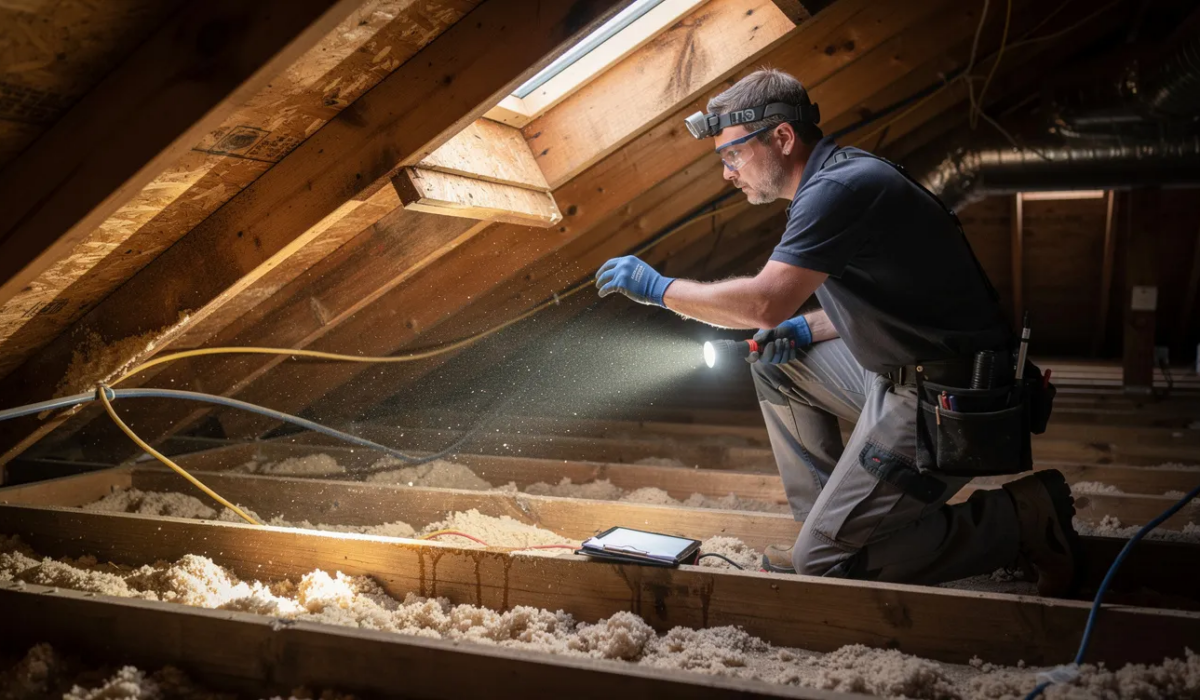
A good roofing contractor will also ask about homeowner concerns – hot upstairs rooms, past leaks, recurring ice dams, or prior attic work – to connect observations with real-world symptoms. The inspector verifies that all attic sections have adequate airflow and should deliver clear recommendations prioritizing safety and roof protection. Homeowners should receive a written report after the inspection.
This inspection is also an opportunity to identify whether roof repair or eventual full replacement might be needed to fully address ventilation and moisture issues.
Should You Upgrade Ventilation During a Roof Replacement?
Replacing a roof in Parma is the ideal time to correct long-standing attic ventilation issues because decking, ridge lines, and soffits are more accessible. During roof replacement, evaluate:
Existing ridge vents and whether they run the full length of the entire peak
Whether intake vents along the soffits provide enough NFVA for the planned exhaust
Condition of roof decking and any moisture-related damage
Placement and number of box vents on hip or complex roofs
Routing of bathroom and kitchen exhausts through properly flashed roof vents
Condition and thickness of attic insulation visible once old materials are removed near eaves
Opportunities to improve ice and water shield coverage in valleys and along eaves prone to ice dams
A ridge vent should not be added automatically to every Parma roof – it must be paired with sufficient, unobstructed soffit intake and a roof design that supports continuous ridge exhaust. Continuous soffit intake vents and continuous ridge exhaust vents provide effective ventilation only when properly matched.
A reputable roofing contractor should compare options for your specific roof shape rather than pushing a one-size-fits-all solution. When getting roof replacement estimates, ask how each bid addresses attic ventilation, insulation at the eaves, and long-term roof performance in northeast Ohio weather. The difference between a new roof that works well and one that leads to problems often comes down to these details.
Homeowner Attic Ventilation Checklist
Use this simple checklist from the ground and inside the attic (if safe) to decide whether to call a professional:
□ Are soffit vents visible along the eaves, and do they appear open rather than painted over or blocked?
□ From inside the attic, is insulation pulled back from the eaves, with baffles to keep air channels clear?
□ Can you identify some form of exhaust ventilation near the top of the roof (ridge vent or box vents)?
□ Are all bathroom fans and kitchen exhausts vented outside through a roof or wall cap, not into the attic?
□ Do you see any moisture stains, dark spots, or rusted nails on the underside of the roof decking?
□ Are there any signs of mold or mildew on rafters, sheathing, or insulation?
□ Is the upstairs noticeably harder to cool in July and August than the main floor, even with a working AC?
□ Do you experience recurring ice dams along the eaves in winter, despite clearing gutters?
□ Have you noticed premature shingle curling, cracking, or heavy granule loss?
□ Has a professional roofer ever evaluated your attic ventilation system as part of a roof inspection?
If several of these items raise concerns – moisture, comfort issues, ice dams, or visible roof wear – schedule a professional attic and roof ventilation inspection in Parma. Bring this checklist when meeting with a roofing company in Parma Ohio so you can discuss each point and understand recommended solutions.
A note about our website: If you’ve visited ParmaRoofingCompany.com and briefly seen a page performing security verification before loading, that security service is simply filtering out malicious bots to protect your information. Once verification is successful, you can browse freely – including scheduling your free inspection. If a respond ray id message appears, just wait a moment and refresh. The bot filtering keeps the site safe for real homeowners across Cuyahoga counties and surrounding communities like Brooklyn, Independence, Middleburg Heights, and North Royalton.
Frequently Asked Questions About Attic Ventilation in Parma
These FAQs address common follow-up questions from Parma homeowners that go beyond the main sections above. Each answer is kept practical to help you decide whether to take the next step.
How often should Parma homeowners have their attic ventilation checked?
Most homes benefit from a roof and attic ventilation check every few years. Yearly inspections are recommended if the roof is older than 15–20 years, or if there have been recent leaks, ice dams, or remodels. Scheduling a roof inspection before peak summer heat or before winter can catch ventilation and moisture problems early, when fixes are usually less invasive. Contact us to schedule a convenient time and we can inspect your system and replace any components that are no longer performing.
Can I improve attic ventilation myself, or do I need a roofer?
Homeowners can safely address small items such as pulling insulation back from soffits, adding baffles, or confirming that bath fans vent outside. However, cutting new roof vents, adding a ridge vent, or changing exhaust ventilation should be left to a roofing contractor. Improper DIY vent installation can create leaks, void shingle warranty coverage, or upset the balance between intake and exhaust on Parma roofs. Always have a professional inspect the layout before making changes.
Does attic ventilation affect my shingle warranty?
Yes. Poor ventilation can void roof manufacturer warranties. Major manufacturers require adequate, balanced attic ventilation for full warranty coverage, and documented ventilation design is often part of a quality roof replacement. Ask your roofer how the proposed vent system meets manufacturer requirements so future claims are less likely to be denied. A proper ventilation system that meets code helps protect your house and your investment for the long term.
Will better attic ventilation always lower my energy bills?
Improved attic ventilation can support comfort and may reduce cooling loads, but actual energy savings depend on many factors including insulation levels, air sealing, HVAC efficiency, humidity levels, and thermostat habits. Treat ventilation improvements as part of an overall comfort and roof protection strategy rather than expecting guaranteed dollar savings each month. The real value is in preventing costly repairs, extending roof life, and keeping your home more comfortable through northeast Ohio’s humid summers and harsh winters with snow and cold.
When is the best time of year to upgrade attic ventilation in Parma?
Ventilation upgrades are commonly done during roof replacement in the warmer months, but inspections and many improvements can be performed spring through fall whenever conditions are safe for roof work. Winter attic inspections can be valuable for spotting condensation, frost, and ice dam patterns, which help a Parma roofing contractor design better ventilation and insulation upgrades for the next season. Contact Parma Roofing Company to schedule a free estimate or free inspection – we serve homeowners throughout Parma and the surrounding area and can help you install the right system for your home so your attic and roof can perform the way they should through every season.