
- By Phoenix Roofing
- ParmaRoofingCompany
- 0 Comment
Storm Damage Parma Ohio: What to Do After
After severe weather moves through Parma, the first few hours and days matter more than most homeowners realize. What you do immediately after the storm-and what you avoid doing-can affect your safety, the condition of your roof, and the strength of any future insurance claim. This guide gives Parma homeowners a clear, practical plan for handling storm damage from start to finish.
Key Takeaways
After a severe storm in Parma or Parma Heights, homeowners should first make sure everyone is safe, stay well away from downed power lines and unstable trees, and then carefully assess the property from the ground before contacting professionals. A roof does not have to be actively leaking to have sustained real damage from wind, hail, or falling branches.
Looking for expert roofers in Parma Heights?
Phoenix Roofing & Solar is your #1 Parma roofer.
Make an appointment now!
Here is a quick-reference checklist to keep in mind:
Confirm safety – account for everyone in the household and avoid hazards like fallen lines and leaning trees.
Inspect from the ground – use binoculars or a phone’s zoom to scan the roof, gutters, siding, and yard for visible damage.
Check indoors – look at ceilings, attic spaces, and walls for water stains, drips, or musty odors.
Document everything – photograph and video all damage, inside and out, with dates noted.
Schedule a professional roof inspection – contact a local Parma roofing contractor for a thorough evaluation.
Contact your insurance carrier – if storm damage is suspected, report it according to your policy’s requirements.
Parma, Ohio, has a humid continental climate with active seasonal weather, which means severe thunderstorms frequently occur across the area. High wind events, hail, heavy rain, falling tree damage, and even tornadoes can produce severe structural damage. Hail from storms can damage roofs and vehicles, while lightning can damage electrical appliances and create fire hazards during storms. Winter ice and snow can cause structural strain and burst pipes in Parma as well.
Parma Roofing Company is a local, safety-focused resource for storm damage roof repair, emergency roof repair, and detailed roof inspections that Parma homeowners can rely on when severe weather strikes.
What Should You Do Immediately After a Severe Storm?
Northeast Ohio storms have repeatedly brought wind damage and tree damage to Parma, Parma Heights, Seven Hills, and surrounding communities. High wind storms can cause tree damage and power outages across the area, sometimes affecting entire neighborhoods for hours or days. If you have been tracking severe weather alerts from the National Weather Service, you already know how quickly conditions can escalate. Here is an at-a-glance action plan for what to do right after the storm passes.
Make sure everyone is safe. Account for every person in your household. If anyone is injured or trapped, call 911 immediately. Parma residents are advised to monitor local weather alerts during storm events, since additional rounds of severe weather can follow.
Stay clear of downed lines, leaning poles, and unstable trees. Downed trees and snapped utility poles are common after strong wind gusts. Never approach or touch a fallen power line-assume it is energized.
Walk the property from the ground only. Scan the roof, siding, gutters, and yard for visible signs of storm damage. Do not climb onto a wet or compromised roof.
Check ceilings and attic for signs of water. Look for stains, active dripping, damp insulation, or darkened roof decking. Water can travel along rafters and sheathing, so a stain may not be directly below the actual breach.
Photograph and video all visible storm damage. Capture wide shots and close-ups. Include the date and note the storm event.
Take reasonable steps to stop additional water intrusion. Move belongings away from leaks, place buckets under drips, and use plastic sheeting to protect flooring.
Schedule a professional storm damage roof inspection with a roofer in Parma, Ohio. A qualified roofing contractor can evaluate all roof planes, flashing, penetrations, and attic conditions, then provide a written report with photos.
Contact your insurance carrier if you suspect a storm damage insurance claim. Early reporting increases your chances of a smooth claims process. Have your inspection report and photos ready.
Residents should also include an emergency kit in their storm preparedness plans-emergency supplies should include food, water, and flashlights so you are ready if power goes out. Homeowners should not attempt DIY roof fixes that could void manufacturer warranties or create additional safety hazards.
Staying Safe and Inspecting Your Parma and Parma Heights Home After Storm Damage
Personal safety always comes before property assessment. Recent storms have demonstrated just how dangerous post-storm conditions can become in the Parma area, and it is worth thinking carefully before stepping outside.
During a severe weather event on a Friday in Jun, several reports from neighbors confirmed significant damage across the community. Resident Angela Sherman described a scene on Chestnut Hills Drive where downed trees blocked the roadway and debris was scattered across multiple yards. Mike Holden, another local resident, shared more comments about tree damage near his house, noting branches crashing into a car parked in the driveway. In Parma Heights, a gazebo ended up on a neighbor’s roof after strong wind gusts carried it from a nearby yard-local news coverage and photo courtesy of residents documented the aftermath, which fortunately resulted in no serious injuries. A tree fell on a home on West 130th Street, a large tree fell onto Big Creek Parkway in Parma, and a utility pole snapped at a busy intersection in Parma, all during the same storm system.
When you first step outside, watch for fallen power lines, leaning or cracked utility poles, hanging branches, damaged or leaning trees, broken glass from windows, loose siding, detached gutters, and sagging or wet ceilings inside the house that could collapse. Heavy rain can overwhelm local storm sewers and lead to urban flooding in Parma, so residents should maintain property drainage to prevent flooding around their foundation. Lightning during storms can also start a fire, so check your garage, attic, and any outbuildings for signs of scorch marks or unusual odors.
To perform a safe, ground-level exterior inspection, use a safe viewing area on your property-like your driveway or sidewalk-to scan the roof for missing shingles after storm events, wind damaged shingles that appear curled or lifted, debris piles, dented roof vents, bent flashing around chimneys, damaged ridge caps, and clogged or twisted gutters and downspouts. Look for shingles or roofing materials scattered in the yard.
For interior checks, look for ceiling stains, active drips, bubbling paint, musty odors, damp attic insulation, darkened roof decking, moisture around chimneys, skylights, and plumbing vents, and water near bathroom fans after wind-driven rain. Any of these signs may indicate that water has found its way through the roof system.
Storm damage can be present even when the roof is not yet leaking. Wind can break the adhesive seal holding shingle tabs down. Hail can bruise asphalt shingles without leaving an obvious hole. And in Northeast Ohio, freeze-thaw cycles common from late fall through early spring can turn these small issues into leaks over time.
Tree damage deserves specific attention. Fallen limbs or entire trees can compromise the roof structure, gutters, garage, and siding. Keep your distance from any tree that is leaning or whose roots appear lifted after heavy rain and strong wind gusts. Use binoculars or a smartphone camera zoom instead of climbing a ladder, and leave any roof walking to a qualified roofing contractor Parma homeowners trust.
Identifying Wind, Hail, and Exterior Storm Damage
Different types of storms leave different clues on your home’s exterior. Accurate identification helps determine whether you need roof repair, a full replacement, or just minor exterior fixes.
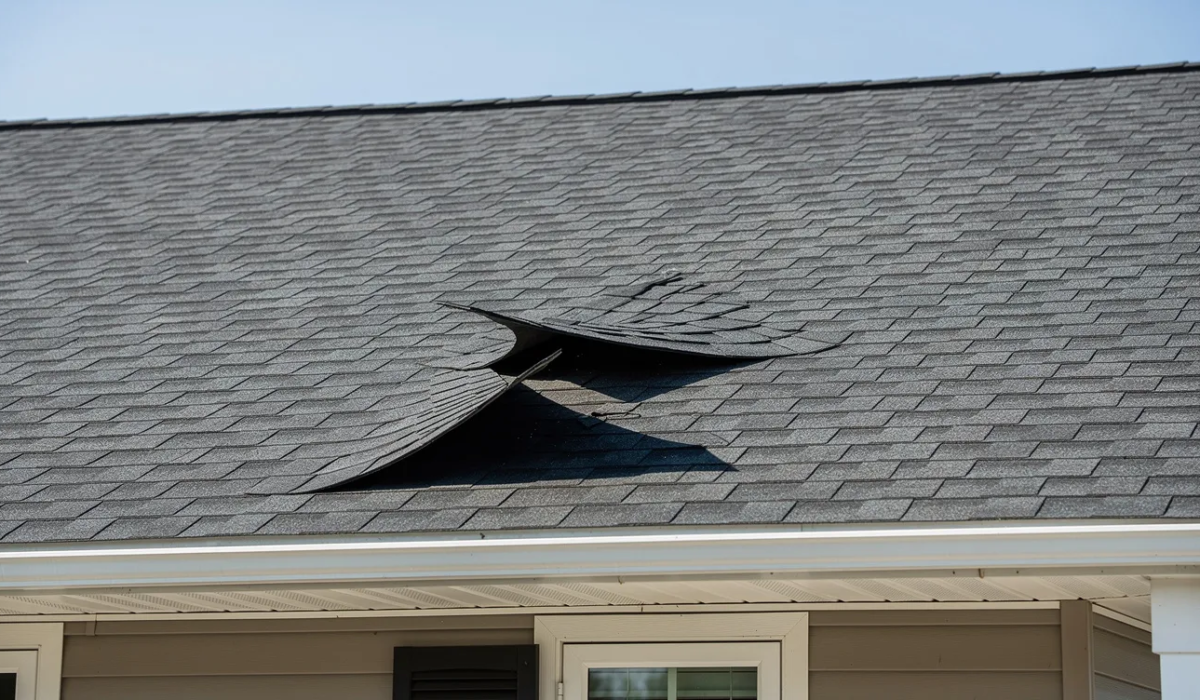
For wind damage in Parma, Ohio, look for these visible signs from the ground: missing shingles, shingles scattered in the yard, creased or folded shingles along the bottom edge, lifted shingle tabs that appear to flutter in the breeze, damaged ridge caps, loose or bent flashing, and twisted or rattling roof vents. Strong straight-line winds reaching 70–90 mph have been recorded in recent Northeast Ohio storms, and debris blowing at those speeds can cause significant impact damage to siding, windows, and roof surfaces.
Roofers identify creased shingles and broken seals by running a hand along the shingle’s surface and checking the adhesive strip underneath. A crease means the shingle was lifted and folded by wind force, weakening its structure even if it settled back into place. These can leak later during heavy rain or when ice forms underneath. Wind-damaged shingles are often concentrated on roof edges, ridges, hips, and around dormers-the areas most exposed to uplift.
Hail damage in Parma, Ohio, shows up differently. Look for dents in aluminum gutters and downspouts, dings on metal fascia, pockmarks on metal roof vents, torn window screens, impact marks on siding, and subtle, dark “bruises” on asphalt shingles that are usually difficult to see from the ground. Hail from storms can damage roofs and vehicles in Parma, and even relatively small hailstones-around one inch in diameter-can cause functional damage to standard asphalt shingles. Homeowners should not attempt to verify hail damage roof impacts by climbing up. Instead, request a professional storm damage roof inspection that includes close-up photos and written documentation.
When checking gutters, siding, fascia, and soffit, look for dented or detached gutters, downspouts knocked loose by tree branches, cracked or missing vinyl siding, holes from flying debris, loose fascia trim along the eaves, and soffit panels that are bowed, missing, or show water stains. These components are part of your home’s weather envelope, and damage to any of them can allow water intrusion even if the roof itself appears intact.
Exterior damage patterns provide useful information. For example, heavy damage on the west-facing side of a house after a strong westerly wind event helps roofers and insurance adjusters understand the severity and direction of the storm. Consistent damage across multiple surfaces-roof, siding, gutters-strengthens the overall evidence.
Damage Type | Common Signs on the Ground | Typical Pattern |
|---|---|---|
Wind damage | Missing, lifted, or creased shingles; damaged ridge caps; bent flashing | Directional – concentrated on windward-facing slopes |
Hail damage | Dents on gutters, vents, and metal; bruised shingles; cracked siding | Random – scattered across all exposed surfaces |
Fallen tree damage | Punctured or sagging roof sections; crushed gutters; broken siding | Localized – focused at point of impact |
Documenting Damage, Preventing Leaks, and When to Call for Help
Thorough documentation and quick, safe mitigation protect both your home and any future storm damage insurance claim. The more organized your records, the smoother every conversation with contractors and adjusters will be.
To document storm damage effectively, take wide photos of each side of the home showing the full roofline and exterior. Then capture close-ups of missing or wind damaged shingles, pictures of shingles and branches in the yard, images of dented gutters and damaged siding, and clear photos of interior ceiling stains or wet drywall. Note the date of the storm and keep a simple written log of what you observe each day. Including a coin or ruler in close-up shots provides scale that adjusters find helpful.
Keep receipts for any temporary repairs, emergency roof repair services, dehumidifier rentals, fans, and tarping. These records can be useful later if you file a roof insurance claim with your carrier, as most policies expect homeowners to take reasonable steps to prevent additional damage.
Reasonable, homeowner-safe steps to prevent additional water damage include moving furniture and electronics away from active leaks, placing buckets or containers under drips, using plastic sheeting to protect flooring, and gently drying damp areas with fans when it is safe to use electricity. Do not attempt to patch the roof yourself or climb onto a wet surface.
Emergency tarping is appropriate when there are large areas of missing shingles, exposed roof decking, punctures from fallen tree roof damage, or active water pouring in during rain. A trained crew should handle tarping-it is a short-term measure designed to reduce additional water intrusion until permanent storm damage roof repair work in Parma is completed.
Don’t cancel or delay your inspection just because the roof is not actively leaking. A professional roof inspection that Parma homeowners can rely on should typically come before major repair decisions. A local Parma roofing contractor can assess whether issues are repairable, help distinguish between normal aging and storm damage, and provide photos and a written report that may support conversations with your insurance adjuster.
After ensuring safety and documenting conditions, contact a trusted roofer in Parma, Ohio, for an inspection if you suspect roof storm damage. Then reach out to your insurance carrier to discuss whether filing a claim is appropriate, following the reporting requirements outlined in your policy.
Choosing a Local Roofing Contractor for Storm Damage and Understanding Insurance Basics
Working with an established, insured roofing company in Parma, Ohio, means you can easily reach them for follow-up questions, warranty service, and future maintenance long after the storm has passed. That ongoing relationship matters more than most homeowners realize at the time.
Qualities to look for in a Parma roofing contractor include a physical presence in or near Parma or Parma Heights, up-to-date liability insurance and workers’ compensation, strong online reviews from Cuyahoga County homeowners, clear written estimates, detailed storm-damage photo documentation, and a willingness to explain repair versus replacement options honestly. The contractor should be familiar with local building codes and ASTM D7158 wind-resistance classifications required under Ohio’s Residential Code.
Be cautious about out-of-town “storm chasers” who appear only right after severe weather, knock on doors in affected neighborhoods, pressure homeowners for quick signatures, or promise that insurance will buy a new roof without actually inspecting the damage or reading the policy. These crews often lack local licensing, skip follow-up visits, and may leave homeowners with substandard work and no recourse.
Here is a plain-English overview of common insurance terms-this is general information, not legal or coverage advice:
Term | What It Means |
|---|---|
Actual Cash Value (ACV) | The depreciated value of the damaged roof based on age and condition |
Replacement Cost Value (RCV) | The estimated cost to replace damaged materials with comparable new ones, subject to policy terms |
Recoverable Depreciation | The portion of RCV sometimes withheld until qualifying repairs are completed |
Deductible | The amount the homeowner is responsible for paying out of pocket before coverage applies |
It is important to understand the distinction between contractor and insurer roles. Roofing contractors identify and document physical storm damage and provide repair or replacement estimates. Insurance adjusters determine whether the damage is covered and how much the policy will pay, based on the policy language. A roofer cannot guarantee your claim will be approved or dictate what your insurer covers.
Parma homeowners should review their homeowners policy for wind and hail language, keep all photos, contractor reports, estimates, invoices, and receipts organized together, and avoid making permanent repairs before both the inspection and documentation are complete-unless safety requires immediate action.
If a recent Northeast Ohio storm, strong winds, or hail event has passed through Parma, Parma Heights, or nearby communities like Seven Hills, Brooklyn, or Middleburg Heights, schedule a professional storm damage roof inspection with a trusted local roofer before minor issues develop into costly leaks. Parma Roofing Company is here to help with honest assessments, detailed documentation, and the storm-damage expertise that comes from serving this area year after year.
Frequently Asked Questions About Storm Damage in Parma
These FAQs address additional concerns Parma homeowners often have after severe weather, beyond what has already been covered in the sections above.
How soon should I have my roof inspected after a storm?
Parma homeowners should try to arrange a roof inspection within a few days to one week after a major wind or hail event. If you see missing shingles, active leaks, or fallen tree damage, contact a roofer sooner. Early inspections catch hidden problems-like broken shingle seals or bruised asphalt-before Northeast Ohio’s rain and freeze-thaw cycles turn them into interior water damage. Timely inspections also help with prompt reporting if you decide to pursue a storm damage insurance claim.
Can I wait until my roof leaks before calling a roofer?
Waiting for a visible roof leak after storm damage is risky. Water can travel along roof decking, rafters, and interior framing long before stains appear on your ceiling. Hidden moisture can lead to damaged drywall, degraded insulation, and conditions that encourage mold growth. It is safer to schedule an inspection whenever there is a reasonable chance the storm affected your roof, even if everything looks fine from the ground.
What if only a few shingles are missing from my roof?
Even a few missing shingles after storm events can expose the underlayment and decking to water, especially during the heavy rains common in Northeast Ohio. The surrounding shingles may also have broken seals or creasing that is not obvious from ground level. A professional can evaluate whether targeted roof repair is sufficient or if there is more extensive wind damage that requires a larger scope of work.
Do I need to be home during the roof inspection?
Being home is often helpful so the contractor can access the attic if necessary, point out interior areas of concern, and review photos and recommendations with you in person. That said, reputable roofing companies can still inspect the exterior while the homeowner is away if arrangements are made in advance. They should follow up with clear photos and a written summary of their findings.
Does storm damage always mean I need a full roof replacement?
Not every case of storm damage in Parma, Ohio, leads to a full replacement. Many roofs only need targeted repairs when damage is limited and shingles are still in generally good condition. The decision depends on factors like roof age-most asphalt shingle roofs in the Cleveland area last roughly 20 to 25 years-the extent and location of wind or hail damage, overall shingle health, and whether the roof can be repaired to a long-lasting standard. A thorough inspection will clarify the best path forward.