
- By Phoenix Roofing
- ParmaRoofingCompany
- 0 Comment
Most Common Causes of Roof Leaks in Parma, Ohio
Key Takeaways
Most roof leaks on a Parma home trace back to flashing, pipe boots, valleys, and ice dams – not just missing shingles.
Ceiling stains often appear 5–15 feet away from where water actually enters the roof system, because water travels along rafters, nails, and decking before dripping down.
Parma homeowners should prioritize a professional roof inspection and proper repair over repeated caulk or roof cement patches that mask the real problem.
Many leaks on Parma roofs can be fixed without a full roof replacement, depending on roof age, overall condition, and storm history.
If you see stains, drips, or attic moisture in your Parma, OH home or anywhere in Cuyahoga County, schedule a free inspection before a small leak becomes a costly repair.
Introduction: Why Is My Parma Roof Leaking?
Roof leaks in Parma, Ohio rarely come from a single dramatic failure. The most common causes include damaged shingles, failed flashing, cracked pipe boots, valley defects, skylight issues, clogged gutters, ice dams, and storm damage. Any one of these can let water into your home – and several often work together.
Parma’s Northeast Ohio climate is hard on roofs. The area receives roughly five feet of snow annually, endures lake-effect storms off Lake Erie, sees spring thunderstorms with driving rain, and cycles through freeze-thaw conditions from November through April. These forces accelerate wear on every roofing component, from shingles down to underlayment.
Looking for expert roofers in Parma Heights?
Phoenix Roofing & Solar is your #1 Parma roofer.
Make an appointment now!
One thing that surprises many homeowners: the spot where you see water on a ceiling is often not where the roof is leaking. Water can run along decking, rafters, and nails before it drips onto drywall. That means a thorough roof inspection – including the attic – is essential before any roof leak repair is quoted. The sections below walk you through each cause, the warning signs, how professionals diagnose leaks, and when repair versus replacement makes sense.
What Are the Most Common Causes of Roof Leaks in Parma, Ohio?
Most roof leaks in Parma trace back to vulnerable details and transitions – not the open field of shingles. Here are the ten most common causes:
Missing or damaged shingles – wind, age, and hail break down shingle integrity.
Failed roof flashing – corroded or improperly installed metal at transitions lets water behind walls and under shingles.
Chimney flashing problems – older brick chimneys common on Parma homes develop complex leak paths through failing step, counter, and apron flashing.
Cracked or deteriorated pipe boots – rubber seals around plumbing vents crack from UV and temperature cycling.
Roof valley problems – valleys concentrate water and snowmelt; poor installation or debris buildup causes overflow.
Skylight leaks – flashing failures, failed seals, or condensation around skylights create persistent drips.
Gutter and drainage problems – clogged or sagging gutters push water under roof edges and behind fascia.
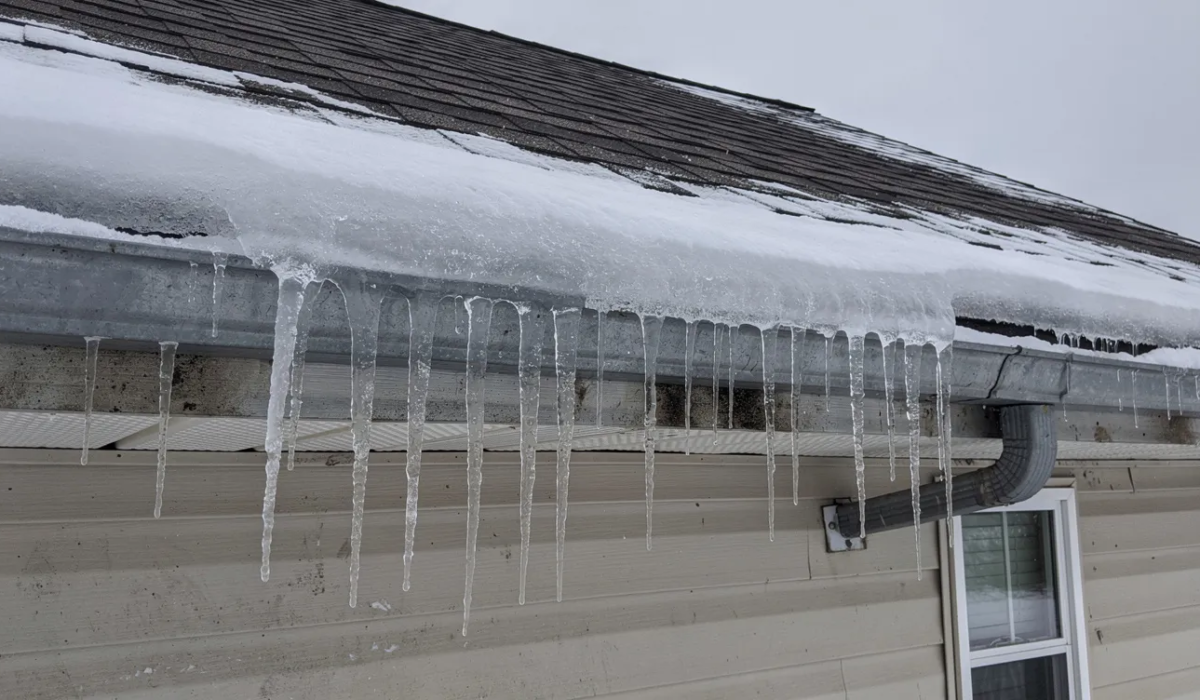
Ice dams – heat escaping through the attic melts snow that refreezes at eaves, forcing water under shingles.
Wind, hail, and storm damage – severe storms lift shingles, crack ridge caps, and dent vents.
Improper previous roofing work – shortcuts during past repairs or installation create hidden weak points.
Some of these are visible from the ground – missing shingles, sagging gutters. Others require an on-roof or attic inspection to detect. The following sections break down each cause with local context and practical advice.
1. Missing, Lifted, Cracked, or Damaged Shingles
Asphalt shingles are the most common roofing material on Parma homes, many of which were built in the 1950s and 1960s. Asphalt shingles are popular for their affordability and durability, but age and weather gradually weaken them. Three-tab shingles typically last 15–20 years in Northeast Ohio, while architectural shingles like GAF Timberline HDZ shingles – commonly used in Parma – last roughly 20–25 years.
Shingle problems include:
Missing shingles blown off by wind
Lifted or creased shingles that remain in place but no longer seal
Cracked shingles from thermal cycling
Broken seal strips that allow wind-driven rain underneath
Granule loss exposing bare asphalt to UV damage
Aging asphalt shingles become brittle and lose granules over time, leaving bare spots, curled edges, and a fragile surface that can no longer protect the underlayment. Northeast Ohio wind gusts along the State Road corridor and surrounding areas can bend or crease shingles without blowing them off, leaving damage that is hard to see from the ground but still leaks.
During a professional roof inspection, your roofer should check for subtle shingle damage, nail pops, and exposed underlayment around valleys, eaves, and ridges.
2. Failed Roof Flashing
Flashing is thin metal installed wherever the roof meets a wall, chimney, or change in slope. It is one of the most leak-prone components on any Parma roof.
Key flashing types include:
Step flashing – where roof slopes meet vertical walls
Counter flashing – embedded in masonry above step flashing
Wall and headwall flashing – at horizontal roof-to-wall transitions
Apron flashing – at the base of chimneys and dormers
Valley flashing – metal lining the valleys between roof slopes
Common failures include missing pieces, corrosion on older galvanized steel, backed-out fasteners, dried-out sealants, and flashing that was reused during a prior roof replacement. Many past “repairs” on Parma roofs simply smear roofing cement or caulk over failing flashing. This is usually temporary and not a proper repair – UV and freeze-thaw cycles break down sealants within a year or two.
A quality roofing contractor in Parma will remove compromised flashing, install new metal correctly, and integrate it with underlayment and shingles rather than adding more sealant.
3. Chimney Flashing Leaks
Chimneys are one of the most common sources of roof leaks on Parma bungalows, capes, and colonials – especially brick chimneys from the 1950s and 1960s that have weathered decades of snow, ice, and rain.
Chimney step flashing, counter flashing, apron flashing, and back-pan flashing work together to move water away from the chimney-to-roof intersection. Typical local failure points include cracked mortar joints, rusted or poorly embedded counter flashing, a missing back-pan, old tar patches, and the absence of a cricket on the uphill side of wider chimneys.
Water stains near a chimney in a Parma home can come from roofing components, the chimney cap, cracked flue tile, deteriorated masonry, or all of the above. Guessing at the cause is risky. Parma homeowners facing repeated chimney leaks should get a detailed roof inspection that includes photos of flashing, mortar, chimney crown, and surrounding shingles before any roof repairs are proposed.
4. Cracked or Failed Plumbing Pipe Boots
Plumbing vent pipes – from bathrooms, kitchens, and drain stacks – penetrate the roof and are sealed with rubber pipe boots. UV exposure, age, and Northeast Ohio temperature swings cause these boots to crack, split, or pull away from the pipe over 10–20 years.
Most leaks originate from cracked rubber pipe boots, making them one of the most frequent findings during leak investigations in Cuyahoga County. Even a small gap around a vent can admit enough water during heavy rain or melting snow to soak attic insulation and stain ceilings. These leaks often show up as spots near bathrooms or hallways.
A roofer in Parma will typically inspect all pipe boots during a roof leak repair visit and can often replace a failed boot as a targeted, cost-effective fix without a full roof replacement.
5. Roof Valley Leaks
Roof valleys are the lines where two roof slopes meet, and they carry a large volume of water and snowmelt. Common valley problems include damaged or improperly lapped valley shingles, exposed and corroded valley metal, nails placed too close to the valley center, debris accumulation from nearby trees, and compromised underlayment.
Heavy rain or rapid snowmelt can quickly overwhelm a poorly built valley, leading to leaks that often show up near interior walls or in closets. Older Parma roofs may have closed-cut or woven valleys, while many modern replacements use open metal valleys. Each style must be installed correctly to prevent leaks.
Valleys deserve special attention during a professional roof inspection, with the roofer checking shingle condition, flashing, nail placement, and any signs of past patching.
6. Skylight Leaks
Water around a skylight in a Parma home does not always mean the skylight itself has failed. Leaks can stem from improper flashing kits, damaged step flashing around the curb, failed seals between the glass and frame, cracked acrylic domes on older units, or disturbed shingles around the skylight perimeter.
In winter, condensation on a poorly insulated skylight can drip and mimic a leak, especially in bathrooms or vaulted ceilings. A roofing contractor in Parma should check both the skylight unit and surrounding roofing material during a roof inspection, looking for water tracks, soft decking, or gaps in the flashing.
Sometimes a proper repair is simply resealing or reflashing the skylight. Other times, an aging or cracked skylight needs replacement during a broader roof repair or roof replacement project.
7. Gutter and Drainage Problems
Gutters and downspouts are a critical part of the drainage system on every Parma roof, protecting fascia, soffit, siding, and foundations from water damage. Common local issues include clogged gutters from maple and oak debris, improper pitch, backed-out spikes on older 1950s-era gutters, loose sections pulling away from fascia, and ice buildup in winter.
Clogged gutters can lead to water backing up against the roof edge, driving water behind fascia boards and under the drip edge at the eaves. This creates hidden wood rot and leaks. Poor drainage also contributes to ice dams at the roof edge, increasing the risk of water backing up under shingles and into the attic.
Regular gutter maintenance is essential to prevent roof leaks. Parma homeowners should schedule regular gutter cleaning and inspection, and consider upgrading to properly hung seamless aluminum gutters when existing systems are failing.
8. Ice Dams and Winter Roof Leaks in Parma
Ice dams occur when attic heat melts snow on the upper portion of the roof. The meltwater runs toward the cold eaves, refreezes, and gradually builds a ridge of ice that traps more water. That trapped water works its way under shingles and into the attic. Parma receives roughly five feet of snow annually, and ice dams frequently form on roofs – especially those with low overhangs.
Contributing factors include inadequate attic insulation, warm air leaks from living spaces, and poor ventilation. Parma roofs often suffer from inadequate attic ventilation, particularly on older bungalows with shallow eaves. Ice dams may indicate heat escaping from homes through attics, making them as much an insulation problem as a roofing one.
Roofs in Parma require building code compliance for ice protection during construction, and Parma roofs often require ice-and-water shield due to winter conditions. Ice barriers are beneficial in roofing systems to mitigate freeze-thaw problems. Proper attic insulation and ventilation can prevent ice dam formation. During a roof replacement or major roof repair, installing or extending ice-and-water shield along eaves and valleys is a critical upgrade.
9. Wind, Hail, and Storm Damage on Parma Roofs
Parma, Ohio experiences heavy winter snowfalls and severe summer storms. Typical Northeast Ohio storms bring thunderstorms with high winds, occasional hail, and lake-effect snow squalls. NOAA storm data shows a thunderstorm wind event near Parma in March 2026 with gusts around 70 mph – more than enough to lift shingles and damage flashing.
Common storm damage includes missing shingles, lifted or creased shingles, bruised shingles from hail damage, cracked ridge caps, dented vents, damaged flashing, and broken branches hitting the roof. Severe storms can damage roofs by lifting shingles or causing granule loss even without creating visible holes.
Storm damage does not always produce an immediate active leak. Weakened shingles or flashing may leak months later during the next heavy rain or snowmelt event. After a significant storm, Parma homeowners should request a professional roof inspection to document damage with photos and determine whether roof repair or insurance-related work is appropriate.
10. Improper Previous Roofing Work
Workmanship matters as much as materials. Many roof leaks in Parma trace back to shortcuts during past roof replacement or repair campaigns. Common installation errors include incorrect nail placement, nails driven too high or overdriven, exposed fasteners in valleys, missing step flashing, improperly sealed pipe boots, and insufficient underlayment.
Multiple shingle layers on older Parma roofs trap heat, hide decking damage, and make it difficult to properly flash roof penetrations. Repeated “band-aid” repairs – layering shingles over damaged areas or coating everything with roof cement – often fail quickly and cost more long term.
Parma requires local permits for roofing work, and Cuyahoga County has specific residential building codes that contractors must follow. Contractors must register with local building departments in Parma. Parma homeowners should choose a roofing contractor who focuses on proper repair techniques, full tear-off when needed, and code-compliant installation rather than the cheapest quick fix. Permits and inspections are included in professional roofing services.
Why Is My Roof Leaking When the Shingles Look Fine?
Many Parma homeowners see no missing shingles from the ground yet still experience leaks. Problems often occur at details and penetrations – chimneys, plumbing vents, skylights, roof valleys, dormers, roof-to-wall transitions, and roof vents where flashing is critical.
From the street, a Parma roof may look perfectly fine, but small flashing gaps, cracked pipe boots, or hidden valley issues are impossible to spot without a close inspection. Inside the attic, darkened decking, rusted nails, and wet insulation often reveal these hidden leaks. Visual checks often identify roof leaks by inspecting shingles and flashing from the ground, but they cannot catch everything.
Schedule a thorough roof inspection – including attic access – whenever you see interior stains but cannot find obvious exterior damage.
Why Does My Roof Only Leak During Heavy Rain?
Some Parma roofs leak only under specific weather conditions – heavy wind-driven rain from a certain direction or prolonged downpours. Possible causes include marginal flashing that only fails under high water volume, small openings around penetrations, valley overflow, clogged or undersized gutters, and wind pushing rain sideways into tiny gaps.
Storms that blow from the west over Parma Heights or from the north off Lake Erie can drive rain into vulnerable transitions that stay dry in light showers. Keeping a simple log of when leaks occur – storm type, wind direction, snowmelt timing – can help a roofer in Parma pinpoint the source during a roof leak detection visit. Targeted roof leak repair often becomes easier once weather patterns and leak timing are clearly understood.
How Professional Roofers Find the Source of a Roof Leak
Accurate roof leak detection starts with investigation, not guesswork or immediate caulking. Active leaks can be difficult to locate because water may travel along roof structures before dripping down. Water travels along rafters before showing on ceilings, sometimes appearing 5–15 feet from the entry point.
The typical diagnostic process includes:
Interior inspection of ceiling stains and walls
Attic inspection for wet insulation, stained or darkened decking, and rusted nails
On-roof inspection of shingles, flashing, pipe boots, valleys, skylights, and previous repairs
Tracing moisture patterns along rafters and comparing them with exterior features
A proper roof inspection that Parma homeowners can rely on will include photos, explanations, and options for repair versus replacement. Simply patching above a stain without finding upstream water paths often leads to repeated leaks and higher long-term costs.
Where You See Water vs. Where the Roof May Actually Be Leaking
In many Parma homes, water appears in one spot but enters the roof system somewhere entirely different. Use this table as a starting point:
Where You See Water | Possible Roof-Related Causes |
|---|---|
Near chimney | Chimney flashing, counter flashing, masonry deterioration, nearby damaged shingles |
Near bathroom | Plumbing vent boot failure, roof penetration gap, condensation |
Near exterior wall | Step flashing, roof-to-wall flashing, gutter or fascia issue |
Around skylight | Skylight flashing, failed seals, condensation, disturbed surrounding shingles |
Near roof valley | Valley installation defect, shingle damage, underlayment failure, debris dam |
Random ceiling stain | Water traveling along decking, rafters, or nails from a distant entry point |
These are possibilities, not diagnoses. Actual conditions on each Parma roof vary. Use this table as a conversation starter with a roofing contractor you trust when scheduling a free inspection.
Signs of a Hidden Roof Leak (Homeowner Checklist)
Catching roof leaks early can prevent major repairs in Parma homes, especially in attics and finished upper stories. Watch for these warning signs:
Water stains on ceilings or walls
Bubbling or peeling paint
Peeling or soft drywall
Musty odors in the attic or upper floors
Darkened roof decking visible from the attic
Wet or matted attic insulation
Rusted roofing nails visible from inside the attic
Mold or mildew on framing or sheathing
Moisture around chimneys or plumbing vents
Repeated stains that return after heavy rain or snowmelt
A faint yellow ring on a ceiling after a January thaw may indicate a slow or intermittent leak rather than a major active one. Check your attic safely during dry weather and after major storms, or have a roofer in Parma perform this as part of a professional roof inspection. Minor signs are easier and less expensive to address than long-term structural damage or widespread mold growth.
What Happens If a Roof Leak Is Ignored?
Ignoring a roof leak in a Parma home can gradually lead to larger issues, depending on how much water enters and for how long. Potential consequences include:
Damaged or compacted attic insulation reducing energy efficiency
Rotting roof decking requiring replacement during future repairs
Mold and mildew growth in hidden wall and ceiling cavities
Stained or sagging ceilings and peeling paint
Soft spots in walls and framing
Electrical concerns where water reaches light fixtures or wiring
Chronic moisture around beams and rafters can weaken wood over time, especially in older Parma houses with original framing. Catching leaks early typically means smaller repair areas, lower cost, and less disruption. Any recurring stains or known active drips warrant prompt evaluation rather than waiting for the next season.
Can a Roof Leak Be Repaired Without Replacing the Entire Roof?
Yes, in many cases. Many roof leaks in Parma, OH can be solved with targeted roof leak repair rather than full roof replacement. Fixable issues include a single cracked pipe boot, a short run of failing step flashing, limited storm damage to one slope, a localized valley defect, or improperly sealed skylight flashing.
The feasibility of repair depends on overall roof age and condition, the number of existing leaks, decking condition, and whether shingles can be matched reasonably. Repairs are ineffective if the roof is generally worn out – at that point, replacement becomes the more practical long-term investment. A professional roof inspection in Parma helps distinguish between isolated problems and signs of overall system failure.
A trustworthy roofing contractor should explain both repair and replacement options when both are viable, not push an unnecessary new roof.
Roof Repair vs. Roof Replacement
Deciding between roof repair and roof replacement is a common question for Parma homeowners dealing with leaks. This comparison can help:
Roof Repair May Make Sense When | Roof Replacement May Need to Be Considered When |
|---|---|
Leak is isolated to one area | Roofing system is near end of useful life |
Roof is under 15–20 years old | Shingles are widely deteriorated |
Shingles remain serviceable | Multiple leaks in different locations |
Flashing can be properly repaired | Past repairs have repeatedly failed |
Damage is localized (storm, pipe boot) | Storm damage is widespread |
Matching materials are available | Significant decking deterioration exists |
Overall system is still healthy | Large areas are no longer repairable |
A roof leak does not automatically mean you need a new roof. Most roof replacements in Parma are completed in one day, but the recommendation should be based on the cause, roof age, material condition, and overall system health. Metal roofs offer superior durability and energy efficiency, tile roofs provide long-term durability with various style options, and slate roofs can last a lifetime with proper maintenance – but for most Parma homes, architectural asphalt shingles remain the practical choice.
A detailed written report from a roofer in Parma, with photos and clear explanations, helps homeowners make informed decisions.
Common Roof Leak Mistakes Parma Homeowners Should Avoid
Good intentions sometimes make roof leaks worse. Avoid these common mistakes:
Assuming the leak is directly above the ceiling stain
Repeatedly adding caulk or roof cement over problem areas
Ignoring a small water spot and hoping it goes away
Walking on a wet, steep, or aging roof
Patching flashing instead of replacing it
Ignoring attic moisture or musty odors
Waiting for a small leak to become larger before calling a roofer
Assuming every leak requires full roof replacement
Hiring anyone who does not inspect before proposing repairs
Each of these actions can lead to recurring leaks, hidden damage, or safety risks. Prioritize safety, proper diagnosis, and professional evaluation over quick fixes from the hardware store.
How to Help Prevent Roof Leaks on Parma Homes
No roof is leak-proof forever, but regular maintenance and early attention extend roof life on Parma homes. Practical steps include:
Schedule periodic professional roof inspection every 1–3 years
Check the roof visually after major storms
Keep gutters and downspouts clear of debris
Maintain flashing and replace aging pipe boots
Address missing or damaged shingles promptly
Ensure proper attic ventilation to reduce ice dams and condensation
Trimmed trees can prevent debris accumulation and damage to roofs
For recurring ice dams, improve insulation, air sealing, and ventilation. Document any small issues with photos and notes, then share them with a roofing contractor during maintenance visits.
When Should You Call a Roofer for a Roof Leak in Parma?
It is better to call for a professional opinion a little too early than too late. Contact a roofer when you notice:
Active dripping or water entering the house
A new or expanding ceiling stain
Visible missing shingles or lifted flashing
Recurring leaks around chimneys or skylights
Wet attic insulation
Leaks that appear only during heavy rain or snowmelt
Stains that return after being painted over
Any suspicion of hail damage or storm damage from wind
Significant active water intrusion may require emergency roof repair and temporary protection before a permanent solution is installed. Emergency roof repair services are available 24/7 in Parma. A reputable roofing company in Parma, Ohio should offer clear communication, photos of issues, and no-pressure explanations of repair options.
Frequently Asked Questions About Roof Leaks in Parma
These FAQs address common follow-up questions from Parma homeowners that go beyond the main article sections.
How much does roof leak repair typically cost in Parma, OH?
Costs vary widely depending on the leak source, roof height, accessibility, and whether decking is damaged. Replacing a single pipe boot may run a few hundred dollars, while a complex chimney reflashing job or valley repair can reach several thousand.
A roof inspection costs about $275 in Parma, and many roofing contractors offer a free inspection with a written estimate so homeowners can review options before committing.
Addressing a small leak early is almost always less expensive than repairing widespread water damage later.
Can roof leaks in Parma be covered by homeowners insurance?
Policies generally cover sudden, accidental damage from wind, hail, or fallen branches but usually do not cover long-term wear, neglect, or routine maintenance issues. Ohio insurers are increasingly tightening roof-age thresholds, with roofs over 10–15 years facing stricter terms.
Document storm dates, save photos, and contact your insurance company promptly if you suspect storm damage. A roofing contractor you trust can provide detailed inspection photos and descriptions to support possible claims.
A real Parma hail claim was approved for roughly $22,558 in replacement cost value with a $5,000 deductible, covering the full roof and garage – a realistic figure for major storm-related work.
How long does a typical roof leak repair take on a Parma home?
Many straightforward repairs – replacing a pipe boot, a short run of flashing, or a handful of shingles – can often be completed in a few hours once scheduled.
More complex leaks involving valleys, chimneys, or hidden decking damage may take longer and sometimes require dry weather windows.
Diagnosis, material availability, and weather conditions all influence the overall timeline in Northeast Ohio. Repeated freeze-thaw cycles damage aging roofs in Parma, so timing around weather matters.
Is it safe for me to go on the roof to look for a leak myself?
Most Parma homeowners should avoid walking on their roofs, especially steep, wet, icy, or aging surfaces. Falls are a leading cause of serious home-injury incidents, and stepping on brittle shingles can worsen existing damage.
Safer DIY checks include using binoculars from the ground and inspecting the attic for obvious moisture trails, darkened decking, or rusted nails.
Call a roofer in Parma who has safety equipment, training, and insurance to perform close-up inspections on your property.
How soon should I schedule a roof inspection after noticing a ceiling stain?
Schedule a professional roof inspection as soon as you notice a new or expanding stain, even if it only appears after heavy rain or snow. Early inspections can often limit damage to a small area and keep repair costs manageable.
Many roofing companies in Parma, Ohio offer free inspection appointments and flexible scheduling. In the Cleveland area and across Cuyahoga County, crews are generally available within days of a request.
If your question was not covered here, reach out for a free inspection – your specific situation deserves a specific answer.
Schedule a Roof Inspection for Your Parma Home
If you have noticed ceiling stains, attic moisture, missing shingles, damaged flashing, gutter problems, or ice dams on your Parma home, the smartest next step is a professional roof inspection before a small leak becomes a larger problem.
An honest roofer in Parma will determine whether roof repair or roof replacement makes the most sense given your roof’s age, condition, and leak history. Proactive roof inspection and proper repair protect your home from further water damage and extend the service life of your existing roofing system.
We serve Parma, Parma Heights, Seven Hills, Brooklyn, and nearby Cuyahoga County suburbs. Contact us by phone or online to schedule a free inspection and written estimate – no-pressure guidance tailored to your Parma home.